
Last updated November 22, 2026
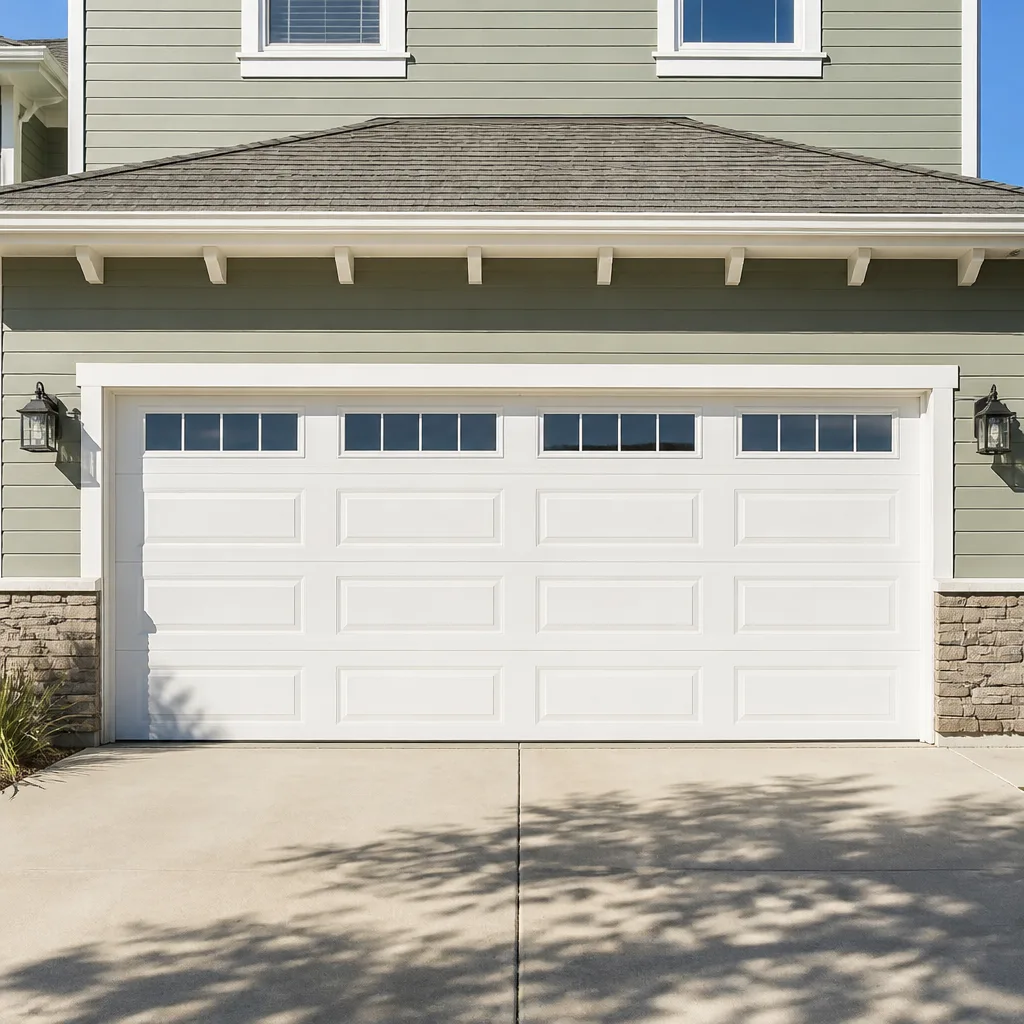 Raised-panel steel
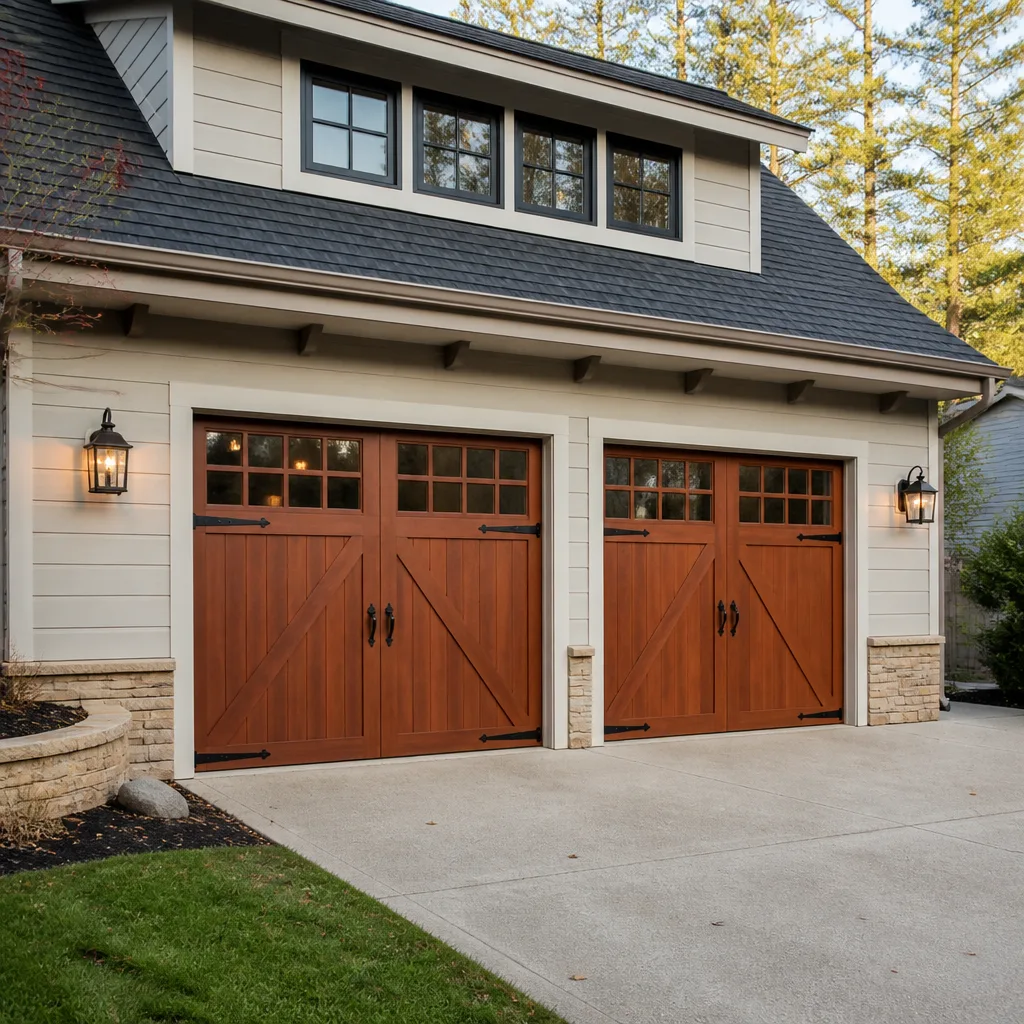 Carriage house
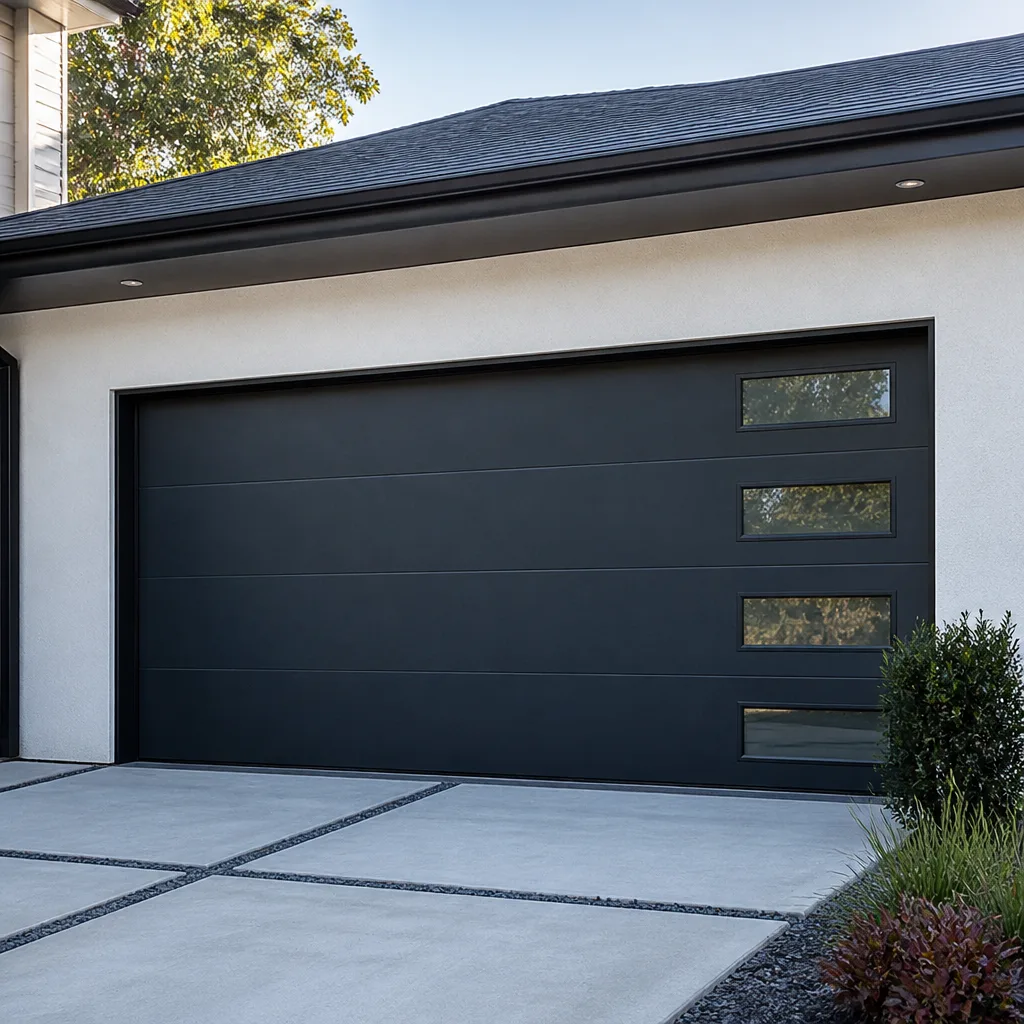 Modern flush
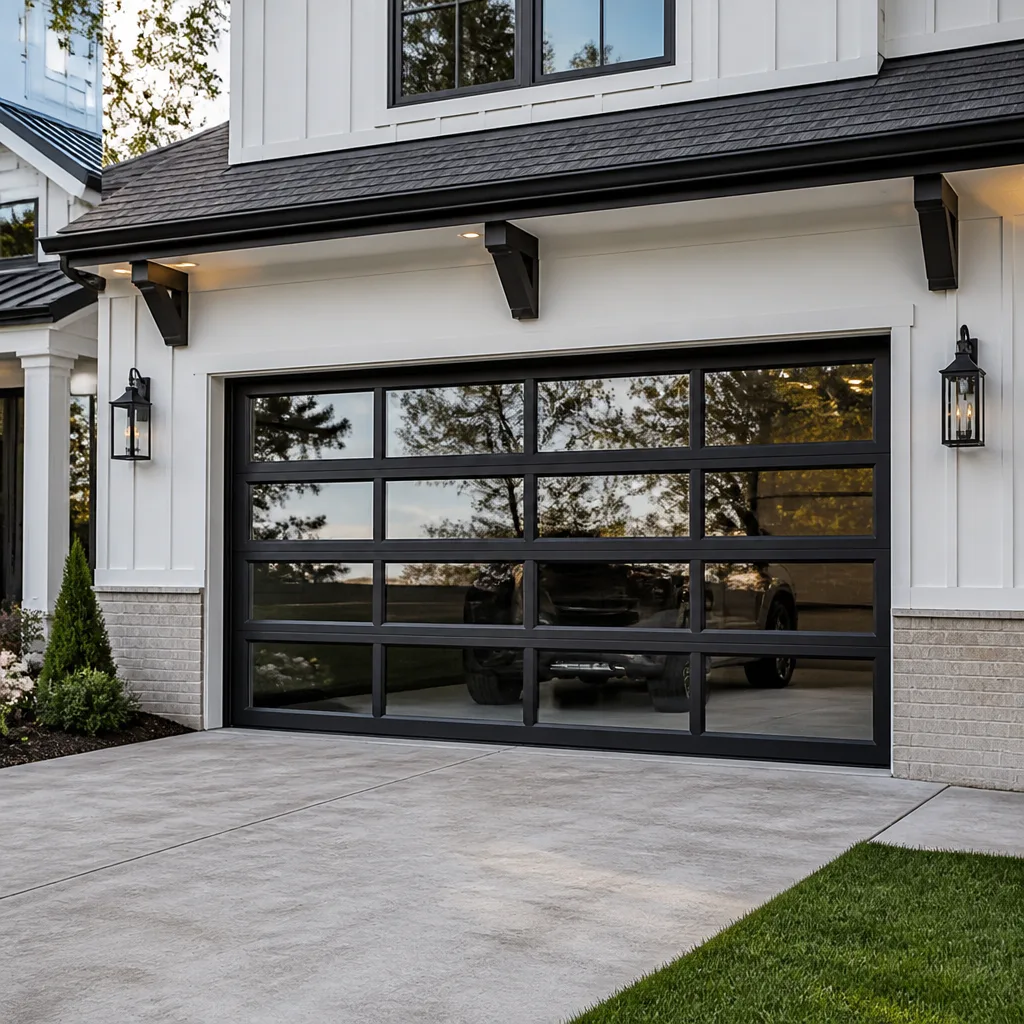 Full-view glass
 LiftMaster openers
 Chamberlain openers
Full 25-point door and opener safety check with every visit - springs, cables, rollers, tracks, and your LiftMaster or Chamberlain opener included
You get a price before we start. It does not change when the pro arrives.
Get your free estimateGarage Door Permits, Codes & Inspections in Gainesville, FL: What You Need to Know
Most people assume a permit is only for new construction, not for something as routine as replacing a garage door. In Gainesville, that assumption causes real trouble. Florida’s wind-load requirements, not the federal model code, drive how garage door permits work here, and a full replacement without one can follow a house all the way to the closing table. The fix at that point is expensive and the timeline stops belonging to the seller. This guide walks through when the City of Gainesville and Alachua County require a permit, what a wind-rated door actually means on the label, how to pull a permit history on a home you’re buying, what an inspector checks, and why an unpermitted door can cost you on insurance and resale. It’s written for homeowners who want the work done right and documented, not just done.
Quick Answer
A full garage door replacement in Gainesville generally requires a building permit because the door is part of the home’s wind-load envelope under the Florida Building Code. Repairs to springs, cables, tracks, rollers, panels and openers usually don’t need a permit unless the work changes the door’s structural attachment or its wind rating. The only way to be certain about your address is to call the City of Gainesville building department or Alachua County’s permitting office before the work starts. If you’re unsure which jurisdiction you fall in, that call settles it quickly.
Styles & brands we work with
- Raised-panel steel
- Carriage house
- Modern flush
- Full-view glass
- LiftMaster openers
- Chamberlain openers
Table of Contents
- When does a garage door job need a permit in Gainesville?
- Repair vs. replacement vs. opener-only installs
- Wind-load requirements and what “wind-rated” really means
- How to check a home’s permit history before you buy
- What a city inspection checks and how long it takes
- The insurance consequence of skipping the permit
- Resale, closing and disclosure risk
- How we handle permits and documentation
When does a garage door job need a permit in Gainesville?
A permit is typically required when you replace a whole garage door, change the headroom or track layout, alter the header or structural opening, or install a new door on a home that never had one. The reason is that the door and its attachment are treated as part of the building envelope, and in Florida that means wind-load rules apply. A like-for-like swap of a single damaged panel, a spring replacement, a roller and hinge tune-up, or an opener replacement generally doesn’t trigger a permit because none of those change the structural attachment or the door’s rating. When in doubt, the City of Gainesville’s building department is the authority for addresses inside the city, and Alachua County handles unincorporated areas. A quick call to whichever one covers your address is worth twenty minutes.
New construction and additions in Gainesville routinely include the garage door on the permit set because the door’s wind rating has to match the opening. Older neighborhoods around Gainesville, from the historic blocks near downtown to the established subdivisions off Northwest 39th Avenue, sometimes have doors that were installed before current ratings were standard. If you’re replacing one of those, plan on a permit and plan on documenting the new rating. That documentation is what protects you later.
- Full replacement: permit almost always required.
- Panel replacement: usually no permit, unless it changes the door’s structural performance.
- Spring, cable, track, roller, hinge: no permit.
- Opener replacement (LiftMaster, Chamberlain, Genie, Clopay-compatible): no permit.
- Changing the opening or header: permit required, and likely a structural review.
Repair vs. replacement vs. opener-only installs
The dividing line in Gainesville is whether the job touches the door’s structural rating. A garage door repair that replaces a broken spring, a snapped cable, a bent track section or a worn roller is maintenance on an existing system and typically doesn’t need a permit. A garage door opener repair or a new opener install is electrical work inside the housing unit, not a change to the door’s wind-load envelope, so it’s usually permit-free as well. A full replacement of the door and its attachment is different: that’s a permitted job because the door’s wind rating, anchorage and header connections all get reviewed.
We see this distinction cause confusion in Gainesville because a homeowner who replaces a single badly dented Clopay panel may assume they need a permit for any garage door work. They usually don’t. Conversely, a homeowner replacing the whole Clopay door to get a new color may assume no permit is needed because the job is cosmetic. That’s the one that gets flagged at closing. The test is structural, not cosmetic: if the new door has a different wind rating, attachments or opening, get the permit.
- Repair scope: spring, cable, roller, hinge, track, panel.
- Opener scope: motor, rail, belt, safety sensors, smart module (LiftMaster myQ, Chamberlain, Genie Aladdin).
- Permit scope: whole-door replacement, structural opening change, new install.
Wind-load requirements and what “wind-rated” really means
Wind-rated means the door has been tested or evaluated to withstand a specified design pressure, and that rating appears on a label or a product evaluation document tied to the Florida Product Approval system. It is not the same as “heavy duty,” “reinforced” or “impact resistant,” and a sales sheet that says “storm ready” without a product approval number is not the same thing as a wind-rated door. The Florida Building Code addresses wind loads in Chapter 16, and the door’s rating has to match the design pressure for the opening based on the home’s location, exposure and the door’s size. A large door catches more wind and therefore needs a higher rating than a single-car door on the same wall.
In Gainesville, a garage door is often the largest opening on the windward side of the house, which is exactly why the code treats it seriously. When a door blows in, the pressure equalizes inside the home and the roof can lift. That’s the physics behind the requirement, and it’s why an unrated or underrated door on a permitted replacement gets flagged. Our technicians have up to 8 years of experience working with doors from Clopay, Amarr, Wayne Dalton and Raynor, and part of that work is matching the door’s label and product approval to the wind requirement on the permit drawings. If the label doesn’t match the application, the inspector won’t sign off.
- What to look for on the label: the Florida Product Approval number, the design pressure (in psf), and the door size it applies to.
- What “reinforced” doesn’t mean: it isn’t a rating; it’s a description.
- Why size matters: larger doors need higher design pressure ratings for the same wall.
How to check a home’s permit history before you buy
If you’re buying a home in Gainesville, checking whether a previous garage door replacement was permitted is one of the highest-value twenty-minute tasks you can do before you sign. The process is straightforward and usually free. You’ll need the property address and parcel number, and you can pull the record through the City of Gainesville’s online permitting portal or Alachua County’s building department, depending on the address. If the record shows a permit for the garage door with a final inspection on it, the door was reviewed and signed off. If the door is newer than the house but there’s no permit on record, treat that as a red flag worth raising with your agent.
- Find your address’s jurisdiction: city of Gainesville or unincorporated Alachua County.
- Pull the property record online through that jurisdiction’s permitting portal.
- Search for permits filed under the garage door scope or the address’s complete history.
- Look specifically for a final inspection status, not just an issued permit.
- If a replacement door is present but no permit exists, ask the seller to explain or price the correction into the deal.
- Request a copy of the product approval label for the door if the seller claims it was wind-rated.
We’ve been asked to help buyers do this in Gainesville more than once, and the pattern is consistent: an unpermitted door is easy to spot once you know to look, and it’s much cheaper to raise it before closing than after. If you’d like us to look at the door itself and confirm the label and installation, we can do that as part of a free estimate and give you a written description of what’s installed.
What a city inspection checks and how long it takes
An inspection on a garage door replacement is short, focused and specific. The inspector is verifying that the door installed matches the permitted scope and the rated product, and that the attachment is sound. In our experience with Gainesville jobs, the inspection itself is typically a brief visit once the door is fully hung, and the timeline from permit application to final inspection depends on the jurisdiction’s current workload and how quickly the door arrives. Expect the process to be measured in days to a few weeks, not hours, which is why a full replacement is a scheduled job rather than an urgent one.
- Door matches the permit: same product, size and wind rating as filed.
- Label and product approval: present and legible.
- Attachment and anchorage: brackets, jamb and header connections per the drawings.
- Track alignment: door operates freely with no binding.
- Safety devices: opener safety sensors and manual release work.
- Final inspection status: recorded on the permit, which is what closes it out.
What inspectors don’t do is test the springs, evaluate the balance of the door or check your opener’s wiring in detail. That’s our job at install and afterward. If your door is currently stuck, making noise or won’t close, that’s a repair scope, not a replacement scope, and it can be handled now rather than after a permit is issued. For that kind of problem, garage door spring repair is often the only thing standing between you and a working door, and spring work never needs a permit.
The insurance consequence of skipping the permit
If a storm causes structural damage to the garage and the door turns out to have been replaced without a permit or without a rated product, the claim can get complicated. A carrier may treat an unpermitted, unrated door as a pre-existing condition and carve out or deny the portion of the loss tied to that opening. This isn’t a scare tactic; it’s how coverage tends to work when a policyholder can’t document that a rated product was installed to code. The permit and final inspection are the proof. Without them, you’re arguing from memory instead of paper.
In Gainesville, wind events are a real part of the risk profile, and the garage door is the single largest opening on most homes. That makes documentation worth more here than it might be in a calmer market. The good news is the fix is cheap at the front end: file the permit, keep the product approval label, and keep the final inspection record with your home documents. We can work with your insurer if a claim is in question, but the documentation has to exist first. A door with a clean permit and a legible label is the version your adjuster wants to see.
Resale, closing and disclosure risk
An unpermitted door replacement tends to surface at the worst possible moment: after a buyer is under contract and the title company, inspector or appraiser asks a question. At that point the seller is negotiating from a weak position and the timeline isn’t theirs to control. In Gainesville, a buyer’s agent who pulls the permit history will spot the gap quickly, and the correction can include retroactive permitting, additional inspections, or a price reduction. All of those are more expensive than filing the permit on the front end of a replacement.
If you’re selling a home in Gainesville and the door was replaced at some point, pull the record before you list. If it wasn’t permitted, get ahead of it: contact the jurisdiction, ask what’s needed to legalize the existing installation, and get it done before the buyer’s inspection. If the door is older and you’re planning a replacement anyway, treat the permit as part of the job, not an optional add-on. A clean paper trail on the garage door is one less thing for a buyer to negotiate over, and it’s one of the cheapest forms of resale protection a homeowner has.
How we handle permits and documentation
When we quote a full replacement in Gainesville, the conversation includes the permit. We tell you which jurisdiction covers your address, we tell you whether the door you’ve selected meets the wind-load requirement for your opening, and we include the permit and inspection in the job scope so it isn’t a surprise later. We’re factory-familiar with the eight residential brands most Gainesville homeowners actually own: LiftMaster, Chamberlain, Genie, Clopay, Amarr, Wayne Dalton, Craftsman and Raynor. That means when we spec a Clopay or Amarr door for a permitted replacement, we can match the product approval document to the requirement rather than guessing.
We also handle the other end of the job. If you need an opener replaced and no permit is involved, we do that. If you need a spring replaced today, that’s not a permitted scope and we can move quickly. If you need a new door and a permit, we schedule it, sequence the inspection, and hand you the documentation. One company covers the whole arc, from a noisy door to a brand-new system. If you’ve already found a permit gap on a home you’re buying or selling, call us and we’ll tell you what we see on the door itself. The estimate is free and the price is set per job in writing before any work starts.
Common Mistakes to Avoid
- Assuming any garage door work needs a permit. Spring, cable, roller and opener work usually doesn’t, and pulling a permit you don’t need adds cost and delay to a job that could’ve been done quickly.
- Assuming a full replacement never needs one. In Gainesville, a whole-door swap is a permitted scope in most cases because of the wind-load rules, and the permit requirement doesn’t go away because the job looks routine.
- Trusting a “storm ready” sales sheet. If there’s no Florida Product Approval number and design pressure on the label, it isn’t a wind rating, and an inspector will say so.
- Not pulling the permit history before buying. In Gainesville, a replacement door with no permit on record is one of the most common gaps a buyer can catch in twenty minutes for free.
- Skipping the final inspection. An issued permit without a final inspection is not proof of a compliant install, and a title company may ask for the final.
- Losing the product label. The label with the approval number and design pressure is the document your insurer and your buyer will want. Keep a photo of it with your home records.
- Waiting until closing to fix a gap. The cheap window is before listing. Once a buyer is under contract, you’re negotiating instead of deciding.
See the difference
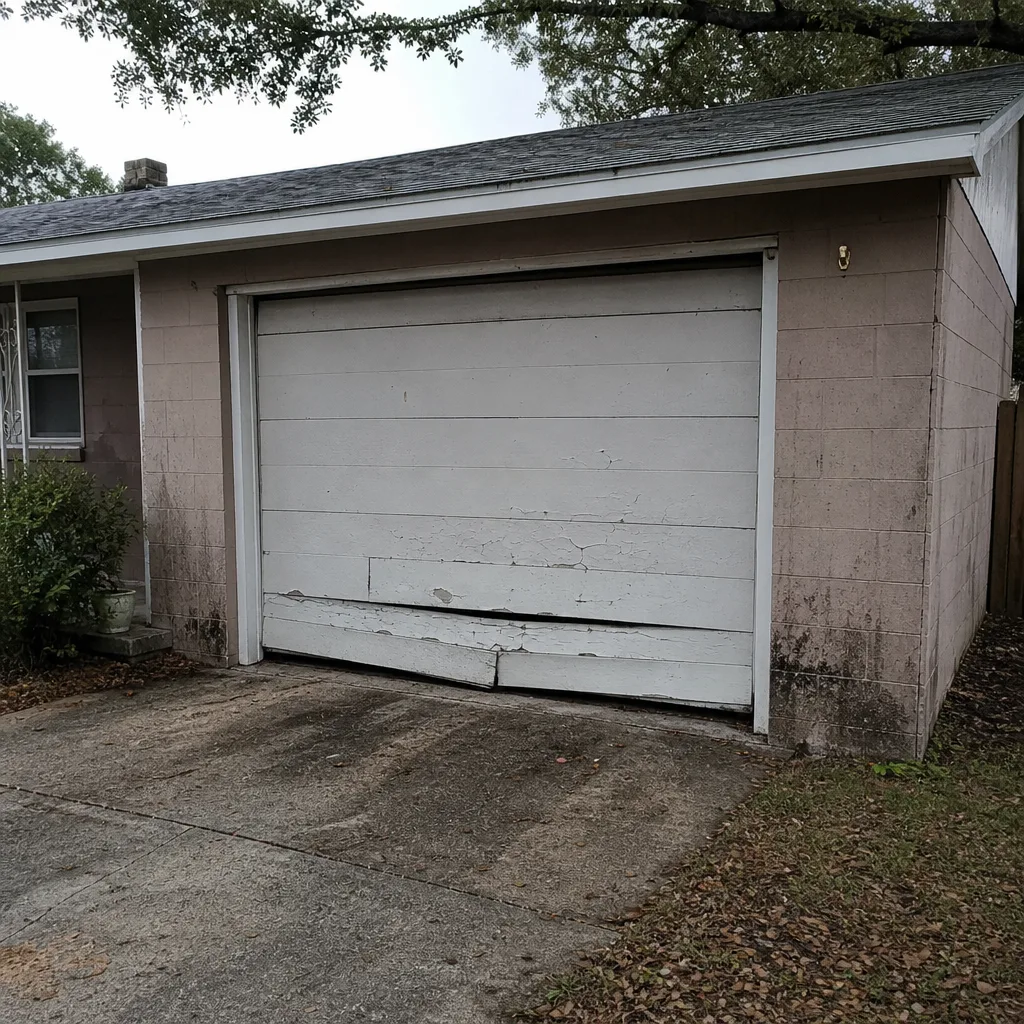 Before
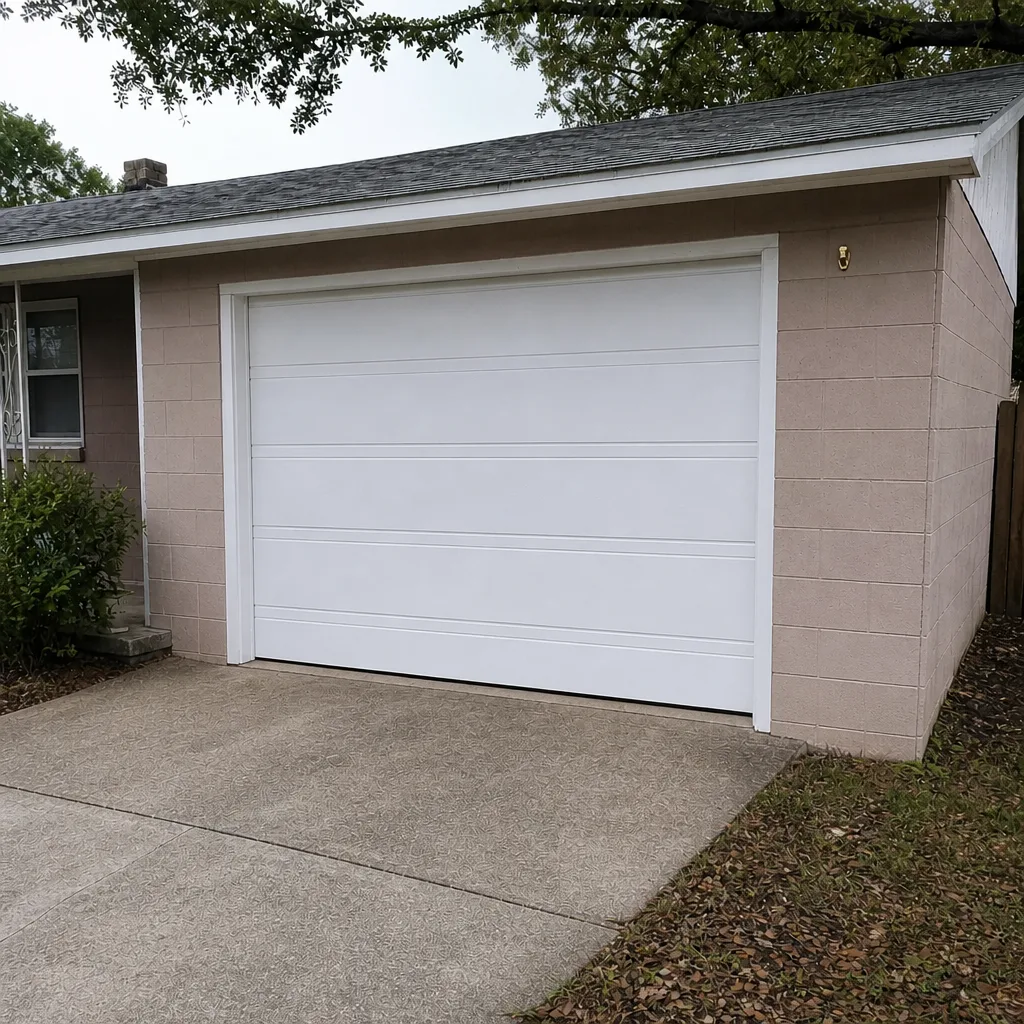 After
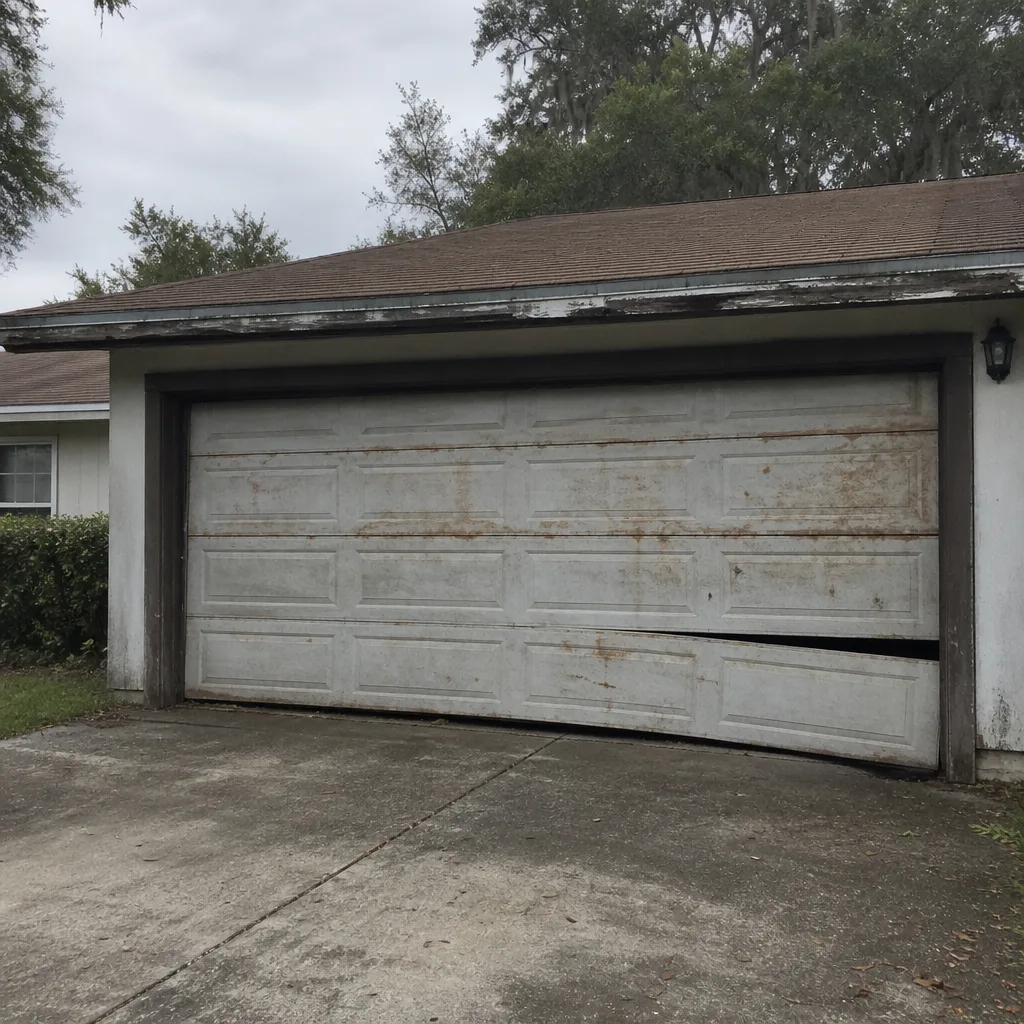 Before
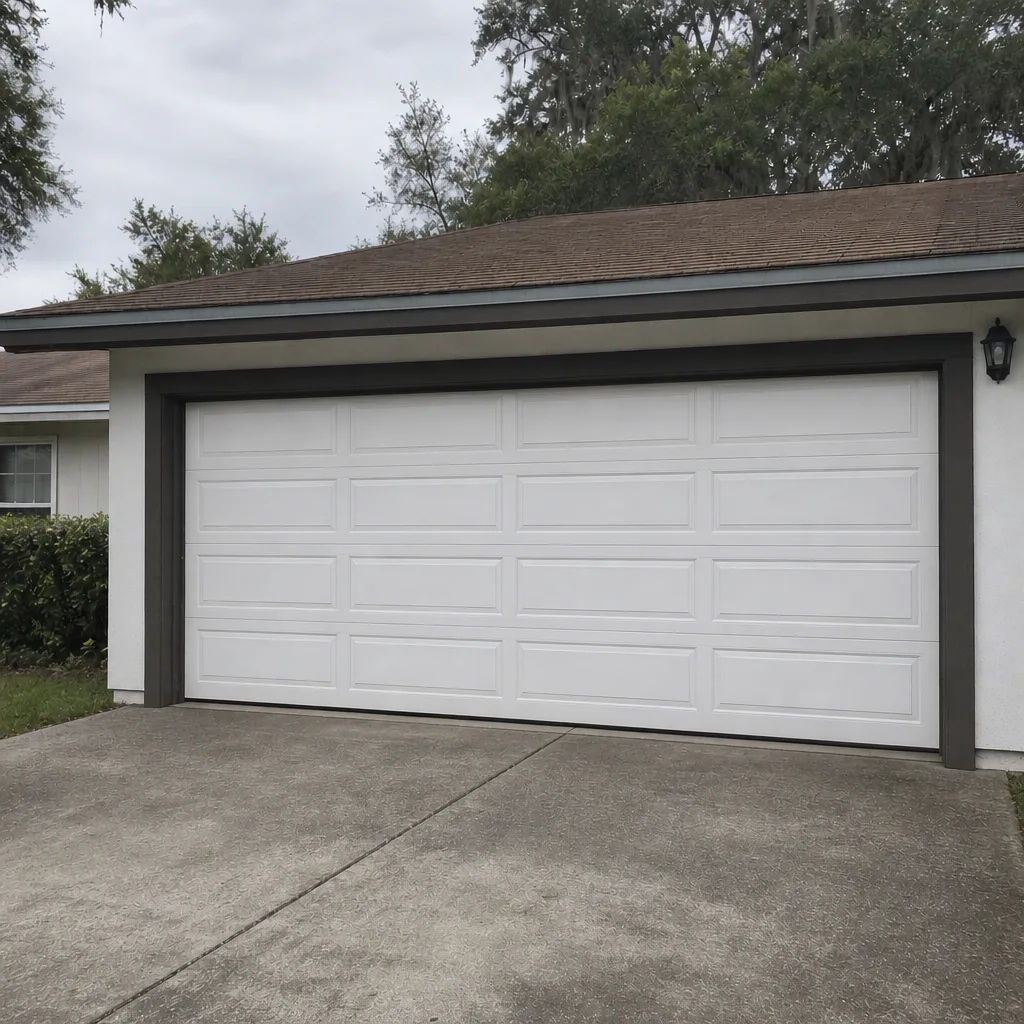 After
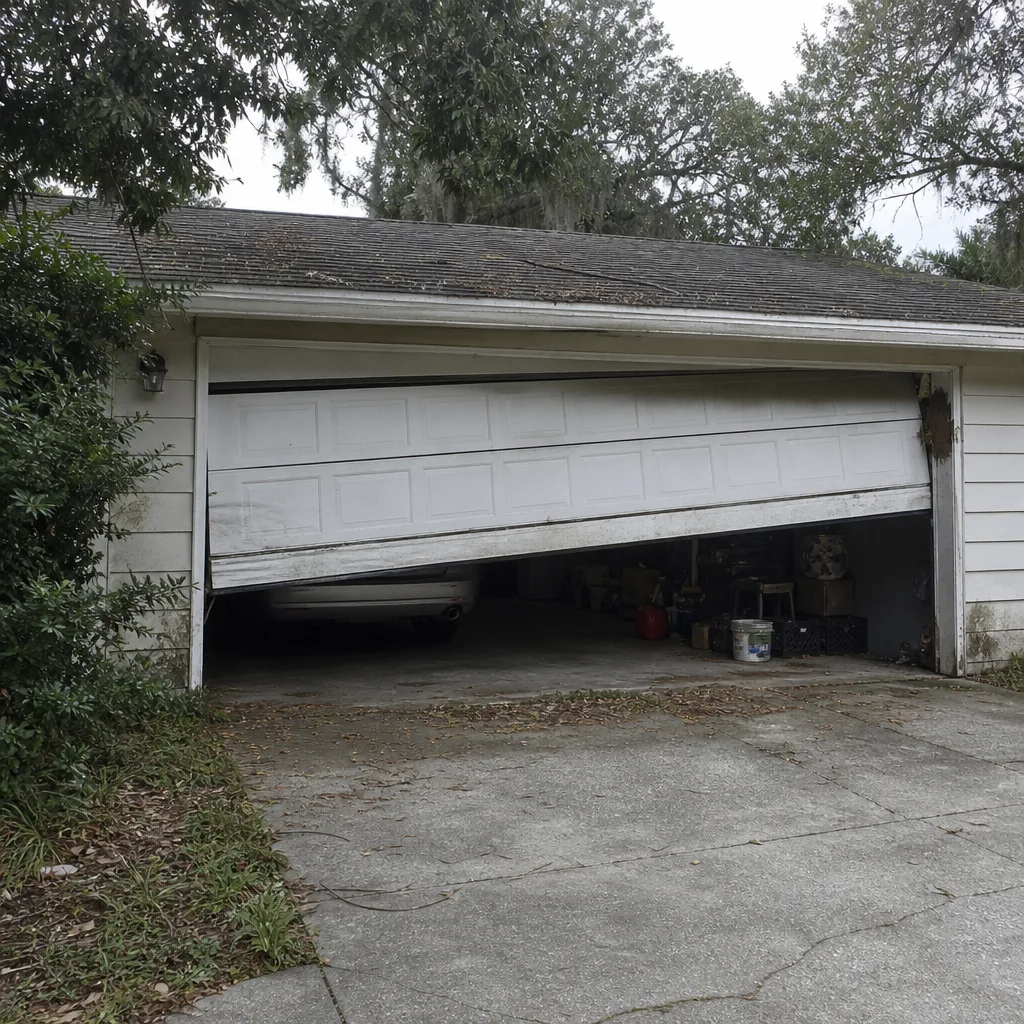 Before
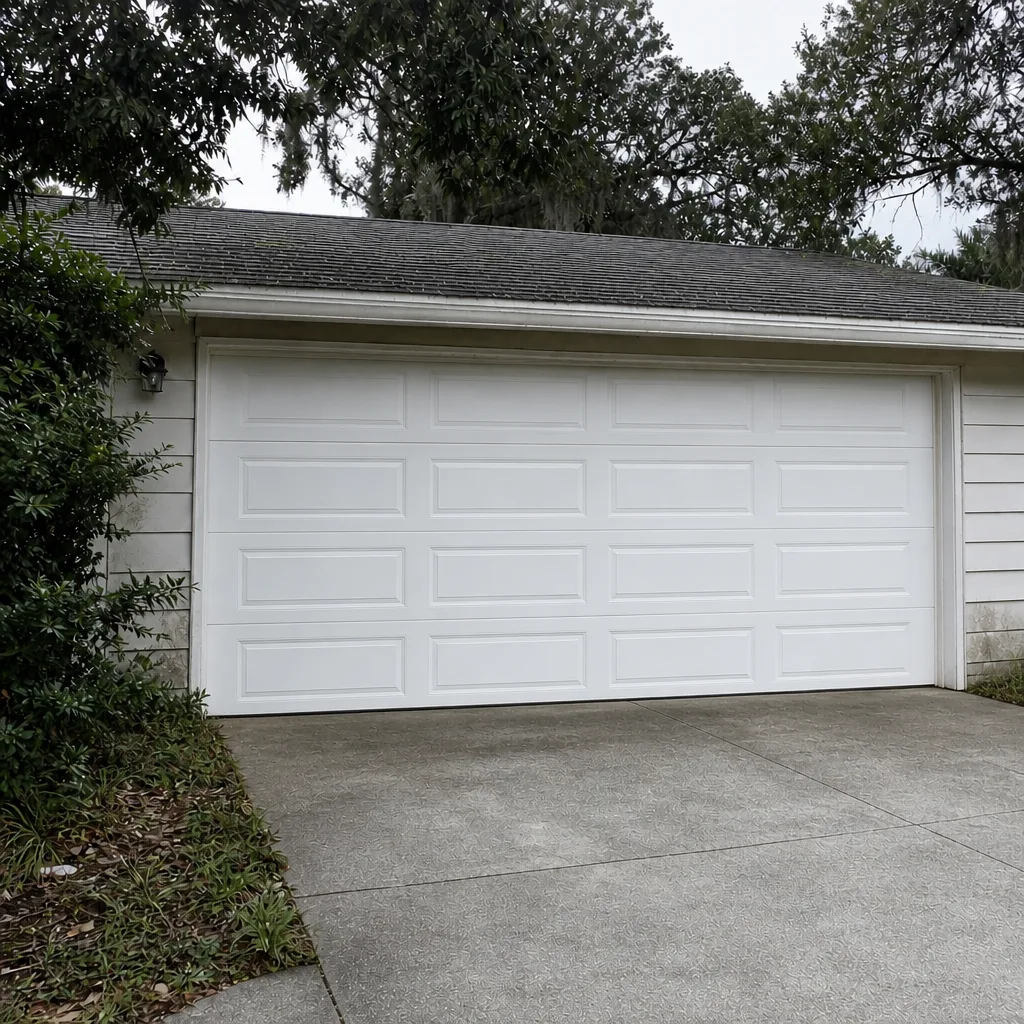 After
When to Call a Professional
Call a professional if a spring has snapped, a cable has broken, the door is hanging off one track, or the door won’t open or close and you need access or security restored. Call us before you sign a replacement contract so the permit and the wind rating get specified correctly on the front end. Call us when you’re buying a home in Gainesville and want an independent look at the door’s label and installation. And call us if the door is off its tracks or making a sound you’ve never heard before; those are signs that need eyes on them, not a web search. Springs and cables are under high tension and can cause serious injury if handled wrong, so we don’t recommend working on them yourself.
Gainesville Garage Door Repair Pros offers free estimates in Gainesville. Call (833) 545-8314. We answer 24/7. Fast dispatch from 7am to 7pm, Sunday through Friday. We’re closed Saturday, but a call outside dispatch hours is booked into the next opening.
Frequently Asked Questions
In most cases, yes. A full garage door replacement in Gainesville generally requires a building permit because the door is part of the home’s wind-load envelope under the Florida Building Code. The jurisdiction depends on your address, so confirm with the City of Gainesville or Alachua County before work starts. Call (833) 545-8314 for a free estimate and we’ll tell you what your address needs.
Yes. Spring, cable, roller, hinge, track and opener replacements in Gainesville don’t need a permit because they don’t change the door’s wind-load rating or structural attachment. Spring work is one of the most safety-critical repairs on a garage door, though, and we don’t recommend handling it yourself. Call (833) 545-8314 for a free estimate.
It means the door has a Florida Product Approval number and a design pressure rating that matches the wind load for your opening. It is not the same as “reinforced” or “storm ready,” and a sheet without those specific numbers doesn’t establish the rating. If you’re unsure what your door’s label says, we can look at it during a free estimate. Call (833) 545-8314.
Pull the permit record through the City of Gainesville or Alachua County’s online portal using the property address, and look for a final inspection on the garage door scope. If the door is newer than the house but there’s no permit, treat it as a question for the seller. Call (833) 545-8314 and we can confirm what’s installed on the door itself.
It can. If a storm causes structural damage and the door turns out to be unpermitted or unrated, your carrier may treat that portion of the loss as a pre-existing condition. The permit and final inspection are the documentation that answers the question. We can work with your insurer, but the paperwork has to exist. Call (833) 545-8314 for a free estimate.
Expect days to a few weeks, depending on the jurisdiction’s workload and door delivery, not hours. That’s why a full replacement is a scheduled job rather than a same-day one. Repairs and spring work don’t wait on a permit and can be handled quickly. Call (833) 545-8314 for a free estimate.
The Bottom Line
In Gainesville, the deciding factor on a garage door permit isn’t federal code; it’s Florida’s wind-load requirements, which treat the door as part of the building envelope. A full replacement is usually a permitted job, a repair or opener swap usually isn’t, and the “wind-rated” label is the document that matters. Pull the permit history before you buy, keep the final inspection, and don’t let a storm claim get complicated by missing paperwork. The permit costs far less on the front end than the correction does at closing. If you’re replacing a door in Gainesville, we’ll spec the permit, the rating and the install as one job.
When your door is stuck, broken or needs a documented replacement, call Gainesville Garage Door Repair Pros at (833) 545-8314 for a free estimate. We answer 24/7. Fast dispatch from 7am to 7pm, Sunday through Friday. The price is quoted in writing and agreed before any work starts, so you know the number before the job begins. Our technicians have up to 8 years of experience on the brands most homes already have, from LiftMaster and Chamberlain openers to Clopay and Amarr doors. For emergency access problems, Gainesville Garage Door Repair Pros is the call to make first.
Written by the team at Gainesville Garage Door Repair Pros.