
Last updated November 22, 2026
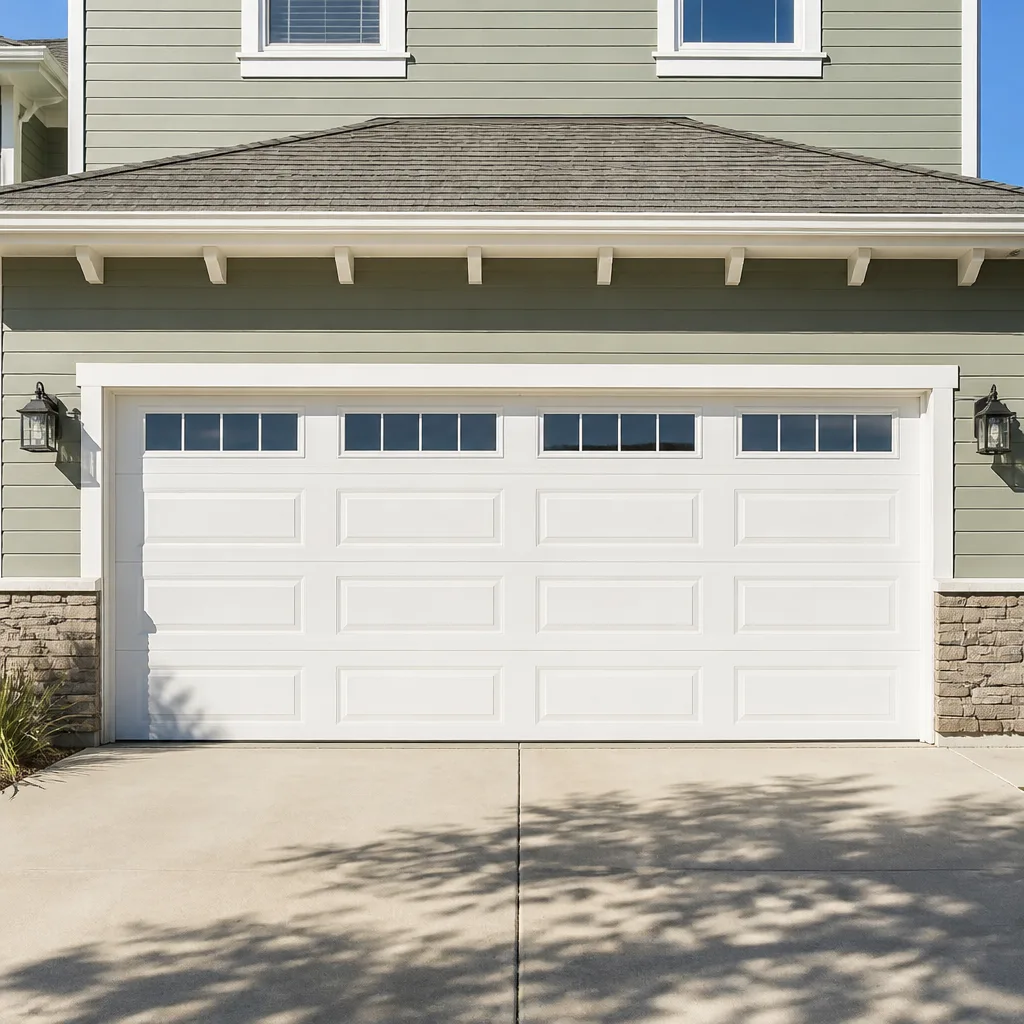 Raised-panel steel
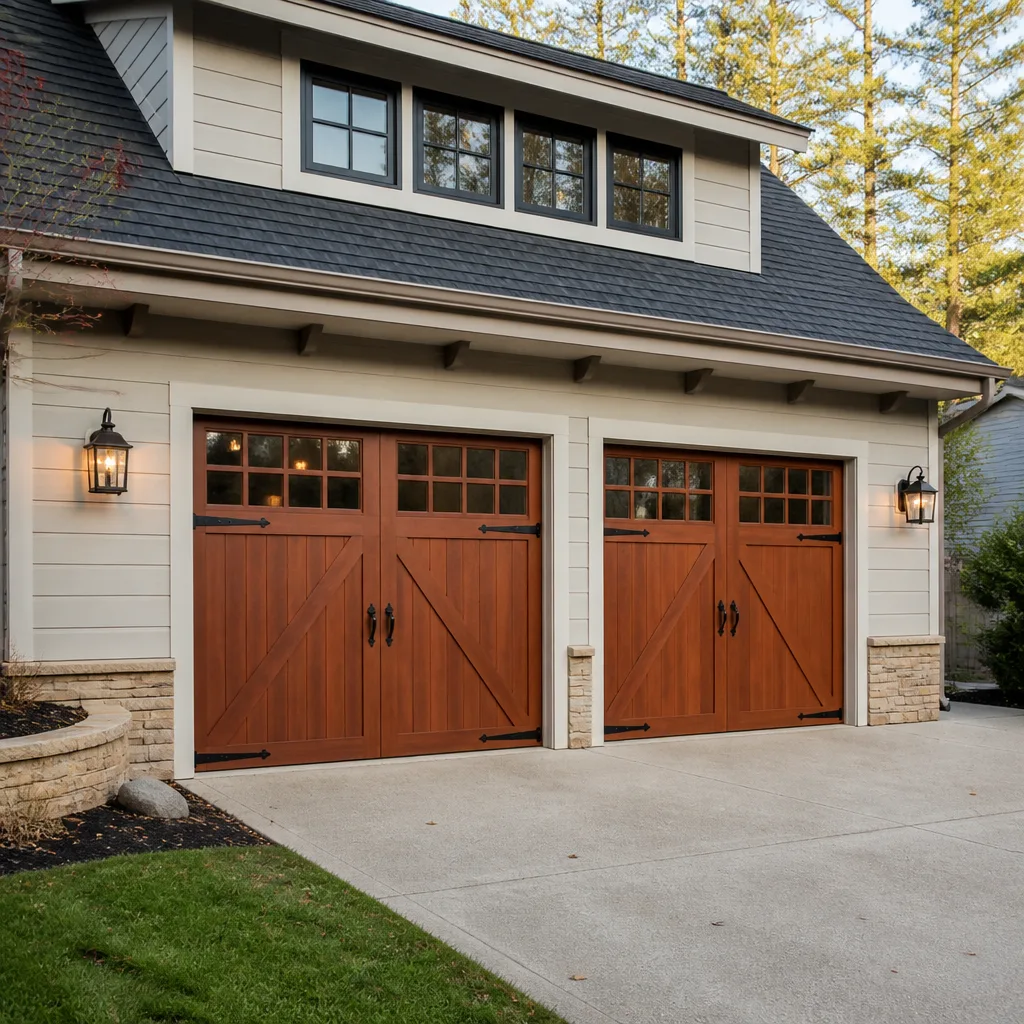 Carriage house
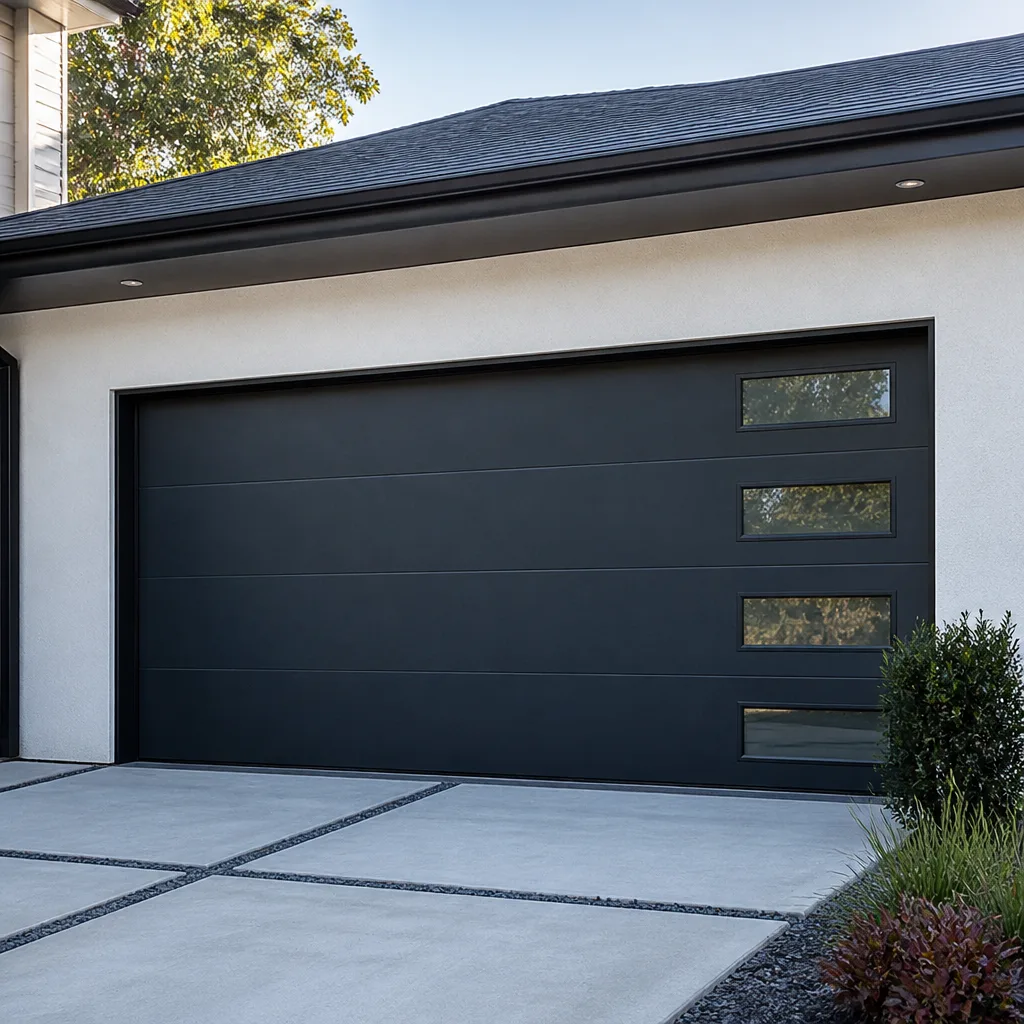 Modern flush
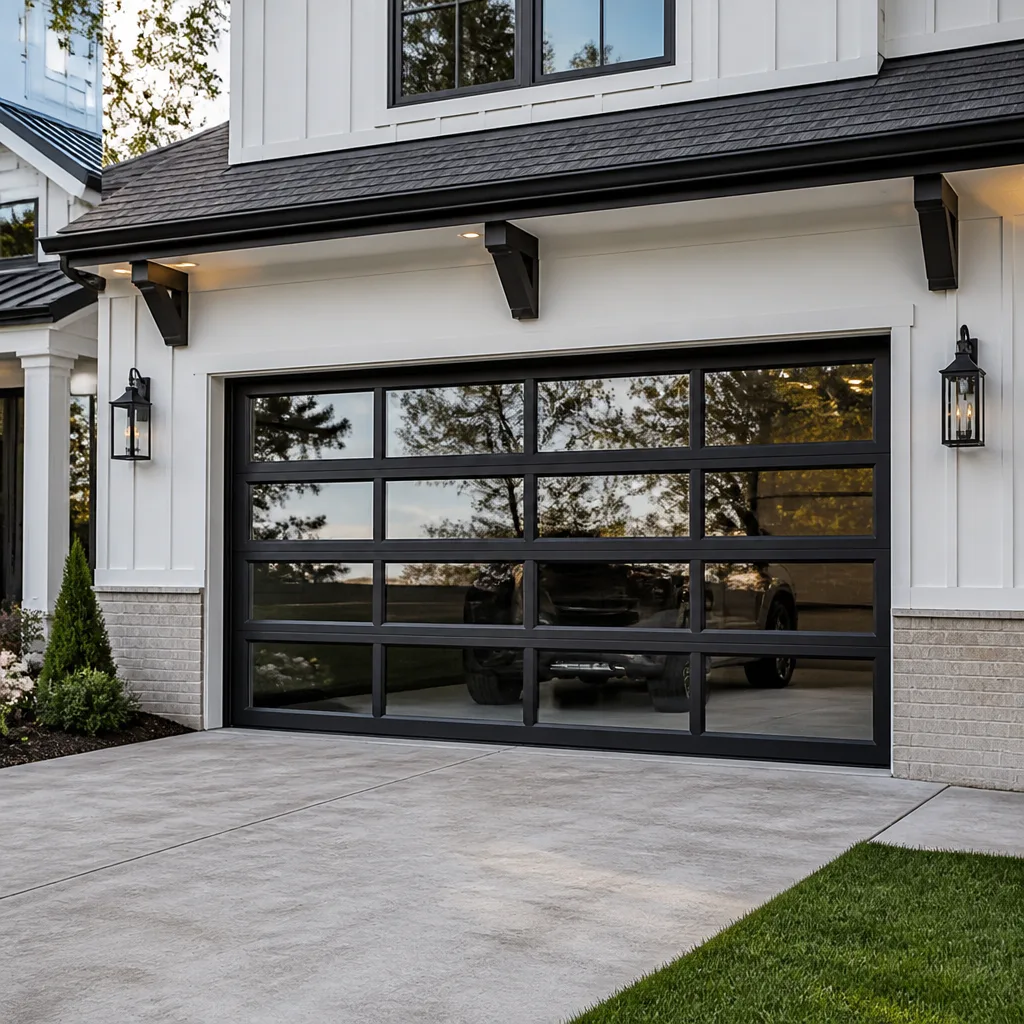 Full-view glass
 LiftMaster openers
 Chamberlain openers
Full 25-point door and opener safety check with every visit - springs, cables, rollers, tracks, and your LiftMaster or Chamberlain opener included
You get a price before we start. It does not change when the pro arrives.
Get your free estimateGarage Door Warning Signs: A Gainesville Homeowner’s Reference Guide
A broken torsion spring feels like it happened instantly. One press of the button, a loud bang, and the door won’t move. But in almost every case, the door was telling you something was wrong for 30 to 90 days before it failed, through sounds, speed changes, and balance shifts most people ignore. Garage doors don’t usually fail without warning. They send three to five specific signals over weeks, and the homeowners who recognize them skip the emergency call entirely. This guide walks you through those signals, what each one points to, and how to test your own door in Gainesville before a small fix turns into a full replacement.
Quick Answer
The main garage door warning signs are unusual sounds (grinding, popping, scraping), a door that runs slower than it used to, a door that won’t stay balanced halfway open, visible rust or gaps on springs, and frayed or kinked cables. Any one of these means the door needs a professional look before you keep running it. Catching them early usually turns a spring or roller repair into a routine service call instead of an emergency.
Styles & brands we work with
- Raised-panel steel
- Carriage house
- Modern flush
- Full-view glass
- LiftMaster openers
- Chamberlain openers
Table of Contents
- Normal Noise vs. Failure Noise: Telling Them Apart
- The 30-Second Balance Test
- Why Your Door Runs Slow in Gainesville Heat
- Visual Signs You Can Spot From the Floor
- A Door That Reverses vs. a Sensor Problem
- Is It the Opener or the Door?
- Seasonal Checks for Gainesville Homes
- When a Warning Sign Becomes a Safety Issue
Normal Noise vs. Failure Noise: Telling Them Apart
Every garage door makes noise. What separates normal operation from a failing one is the type of sound and where it comes from. A healthy door produces a steady, low hum from the opener and a soft roll from the rollers in the track. Anything that grinds, pops, or scrapes is a different category, and each one points to a specific component.
Grinding usually comes from the torsion spring, the opener’s internal gears, or dry rollers dragging in the track. If the grinding is coming from above the door, near the spring bar, that’s a sign the spring coils are binding. If it’s coming from the opener housing, the drive gear inside is often worn.
Popping is almost always the torsion spring. When a spring starts to lose tension unevenly, the coils shift against each other and pop as the door moves. A single pop can happen when a spring first winds; repeated popping on every cycle is the warning sign.
Scraping comes from the door itself, not the opener. It means a roller has come out of the track, a panel has bent and is dragging, or the door is out of alignment and rubbing against the frame. Left alone, a scraping door damages the track and can eventually pull the door off the rails.
Rattling or banging points to loose hardware: hinges, brackets, or bolts that have backed out. It’s the least urgent of the group but the easiest to catch early, and it’s a sign to tighten everything before vibration does bigger damage.
In our experience, the sound that gets ignored most often is a subtle change in pitch, not a loud bang. A door that used to sound smooth and now has a faint rumble is telling you the rollers or bearings are wearing. That’s a cheap fix compared to what happens when a worn part finally fails.
The 30-Second Balance Test
The balance test is the single best way to check whether a spring is near failure, and you can do it in 30 seconds without tools. It reveals whether your springs are still doing their job or whether the opener is carrying weight it was never built to lift.
- Close the door and pull the manual release cord to disconnect the opener. The door should stay down.
- Lift the door by hand to about halfway. It should move smoothly and with modest effort, not feel like lifting a heavy garage door with no help.
- Stop at the halfway point and let go. A balanced door stays put. A door that wants to drop is a sign the springs are losing tension. A door that wants to rise fast is a sign the spring is overwound or the wrong size.
- Lower it back down slowly and reconnect the opener by pushing the carriage until it clicks back into the trolley.
A door that fails the balance test is running under strain every time you press the button, and that strain wears down the opener’s gears and eventually the spring itself. If the door won’t hold halfway or drops fast, stop using it and get a garage door spring repair appointment on the calendar. The springs are the load-bearing component, and this test is the clearest early signal they’re giving you.
One caveat: never touch, adjust, or attempt to release the springs yourself. The torsion spring is under constant tension, and an improper adjustment can cause serious injury. The balance test tells you when to call; it never tells you to fix it alone.
Why Your Door Runs Slow in Gainesville Heat
If your door seems to run slower in July and August than it did in January, the cause is usually the door gaining friction, not the opener failing. Gainesville summers push the temperature in a closed garage well above the outdoor number, and that heat has two effects on your door.
First, the metal in the track expands slightly. The door panels can grow a fraction of an inch, and that’s enough to make the rollers bind where they fit tight in cooler weather. Second, the lubricant on the rollers, hinges, and spring bar thins out, then collects dust and grit, and the moving parts start to drag.
An opener that’s fighting friction draws more current and works harder, and that’s why the door seems slow. The opener isn’t the problem; it’s doing extra work because the door doesn’t roll freely anymore. If you replace the opener without fixing the friction, the new unit inherits the same problem.
Before you assume the opener needs repair, run the balance test and check the tracks for grit. A thorough track clean and a proper re-lubrication of the rollers and hinges often restores normal speed. If the door still struggles after that, the opener’s drive gear may be stripped, and opener repair from a service that knows both LiftMaster and Genie systems is the next step.
The other Gainesville-specific issue is humidity. Coiled springs and cable hardware live in the same warm, humid garage air, and rust forms on unprotected steel faster here than in drier climates. Light surface rust is normal. Heavy rust that pits the cable surface or eats into the spring coils is the warning sign that they’ve lost strength, and that calls for a professional inspection.
Visual Signs You Can Spot From the Floor
You don’t need a ladder or tools to spot the most serious warning signs. The springs and cables sit in plain view above your head, and a few specific patterns tell you they’re failing. Here’s what to look for on each component.
Torsion springs
- A gap in the coil: A healthy torsion spring is a tight, even coil. If you see a visible gap between the coils, the spring has stretched and is losing tension.
- Uneven rust patterns: Rust concentrated on one section of an otherwise clean spring usually means the coil is thin and stressed in that spot.
- A bent or sagging spring bar: The metal bar the springs mount to should be straight. A sag means the load is uneven.
- Two springs, one failing: If you have a matched pair and one looks different from the other (different tension, different wear), the pair needs replacing together.
Extension springs and cables
- Fraying at the drum: On the cable spools at the top corners, fraying threads mean the cable is failing. Look for a fuzzy or unwound section.
- Kinks or bends: A cable that should run straight and taut with a kink in it has been under strain or has been improperly installed.
- Rust along the length: Surface rust is normal; deep rust that pits the cable is not, and a pitted cable can snap suddenly.
- Sagging cable runs: Cables should run tight. Slack or sag is a warning sign the cable or drum is failing.
If you have extension springs, check whether they’re single-strand or have a safety containment cable running inside them. Single-strand springs without containment are a serious safety hazard when they break, and replacing that hardware is not something to put off.
Cables are under extreme tension just like springs, and never handle a cable to check it. Visual inspection from the floor is safe; touching or trying to adjust a cable is not. When you see any of these signs, call a garage door repair service that handles springs and cables as a dedicated specialty rather than a side job.
A Door That Reverses vs. a Sensor Problem
A door that reverses partway down and a door that never gets a signal to close are two different failures, and confusing them wastes a service call and your afternoon. Getting the difference right points a technician straight at the right component.
Reversing mid-cycle
A door that travels down partway and then reverses on its own has one of three things going on. It may be hitting something (a misaligned track, a bind in a roller, a bent panel) and the opener’s safety reverse is doing its job. It may have a tangled or stretched cable pulling the door out of balance. Or it may have a sensor that’s slightly misaligned and the opener is reacting to an intermittent signal rather than a constant one. The tell is happened once or every time: a door that binds will reverse at roughly the same spot on every cycle, while a sensor issue tends to be intermittent.
Sensors that won’t let the door close
The photoelectric sensors sit at the bottom of the track on each side, and if they’re blocked, misaligned, or one is failing, the door won’t close at all or closes partway and stops. The opener’s light usually flashes a diagnostic code when this happens, and resetting the sensors (cleaning the lenses, aligning both eyes so the LED indicator on each is solid) is a safe check for a homeowner. If the light won’t go solid, one sensor is failing.
Here’s where homeowners mix them up. A door that reverses partway down feels like a sensor problem, so people spend an hour cleaning sensor lenses when the real cause is a torsion spring that’s lost enough tension to make the door bind. The reverse is also common: a sensor that’s out of alignment gets blamed on the door when the door itself is fine. Check the balance test first; if the door won’t hold halfway, the problem isn’t the sensors, and you can skip the lens-cleaning entirely. If the balance test is clean and the door still reverses, the sensor or the opener’s travel limits are the suspects, and garage door opener repair is the right call.
Is It the Opener or the Door?
Half the repair calls we hear about are described as “the opener is broken” when the opener is working perfectly and the door is the problem. Sorting out which one is failing saves you from paying for a replacement you didn’t need, and it’s the same check whether you own a LiftMaster, a Chamberlain, a Genie, or a Craftsman opener.
Here’s the quick triage:
- The opener runs but the door doesn’t move: the carriage has disconnected from the trolley, or the belt or chain is broken. That’s opener-side.
- The opener runs, the door moves but struggles: the door is too heavy for the opener because the springs have lost tension or the tracks are binding. That’s door-side, and the opener is the victim.
- The opener hums but doesn’t move at all: the drive gear or capacitor has failed, or the motor is seized. That’s opener-side.
- The door moves fine by hand but the opener won’t run: the opener’s safety system (sensors or limits) is interrupting it. That’s opener-side, and it’s usually a sensor or limit setting.
- The door hits the floor too hard or stops an inch short of closing: the opener’s travel limits need adjusting, or the door’s balance is off. Either way, don’t ignore it, because a door slamming down wears the hinges and a door that stops short leaves a gap and a security issue.
Part of the reason we sort this out so quickly is that we work on the brand you already have. Whether your opener is a smart-connected model like a LiftMaster myQ or a Genie Aladdin, or a legacy belt-drive Chamberlain, the diagnostic logic is the same, and so is the repair. The last thing you want is to be told “we don’t work on that model” after the first visit.
Our technicians have up to 8 years of experience diagnosing this exact mix-up, and in our experience the more expensive-sounding fix is the wrong one most of the time. Get the door balanced and rolling free before deciding the opener needs replacing.
Seasonal Checks for Gainesville Homes
A garage door in Gainesville faces a particular mix: long humid summers, mild winters, and a steady dose of afternoon thunderstorms. That’s not a harsh winter climate, but it is a climate that stresses moving metal in a specific way, and the seasonal checks that matter here are different from what you’d do in a colder part of the country.
Spring, before the hot season: clean and lubricate the rollers, hinges, and spring bar. Check that the torsion springs are a tight even coil and the cables run taut. In Gainesville, the transition into humid summer is the best time to catch rust forming on coils and cables before it pits the metal.
Summer: the door works hardest in heat. Run the balance test once a month. Listen for that rumble that shows up in June and August. If you notice the door slowing, treat it as the friction problem it usually is, not an opener failure.
After a storm: central Florida gets strong afternoon storms, and a garage door can take impact from wind-blown debris. Walk out and check the tracks for bending, the panels for dents, and the sensors for a nudge out of alignment. Impact damage to a track is a common post-storm issue that isn’t obvious until the next time the door runs. Hail is uncommon here, so you’re mostly checking for wind-driven debris and limb damage.
Fall and winter: mild enough that most doors run without issue, but this is the best window to schedule a full tune-up before the humidity returns. A professional tune-up catches the small stuff (worn rollers, loose bolts, a spring starting to stretch) and keeps it small.
If you want the spring to be checked properly, a dedicated Gainesville Garage Door Repair Pros visit covers the balance test, spring inspection, cable inspection, and opener diagnostic in one appointment. Getting a written estimate for any recommended work before anything starts means you know the price before the technician touches the door.
When a Warning Sign Becomes a Safety Issue
Some warning signs are annoyances. Others are safety issues that need to stop the door from running until a trained professional sees it. The line between them is the torsion spring and the cables, and it’s worth being clear about where that line is.
A torsion spring stores an enormous amount of energy, and when it releases that energy by breaking, it can send the spring bar and cable hardware flying. Adjusting, loosening, or trying to “help” the spring yourself is the most common way a homeowner gets seriously hurt. The same goes for cables: they’re under tension and a kinked or frayed cable can snap without warning. The advice from anyone who does this work is simple: never adjust, remove, or try to tension a spring or cable on your own.
The warning signs that mean stop running the door include:
- A loud bang followed by a door that won’t open (that’s a broken spring).
- A door that hangs crooked or one side sagging.
- A cable that has come off a drum, frayed through, or snapped.
- A visible gap or obvious separation in a torsion spring coil.
- A door that comes down hard and fast with no reverse.
On the opener side, wiring and electrical work also carry real risk. If a warning sign points to the opener’s wiring or the safety reverse system failing to test correctly, leave the electrical side to a trained professional.
Our team handles spring repair as a dedicated service, not an afterthought, because spring failure is the leading cause of garage door breakdowns and the one with the real safety risk. A spring that broke at 8pm on a Friday with a car locked inside is exactly the kind of call emergency garage door service exists for. When your door won’t open or close, every minute counts.
Common Mistakes to Avoid
- Assuming a slow door means a failing opener. In Gainesville’s summer heat, a slow door is usually a door with friction and a hardworking opener. Replacing the opener without fixing the friction wastes money and inherits the same problem.
- Confusing a reversing door with a sensor problem. People clean sensor lenses for an hour when the real cause is a spring that’s lost tension. Run the balance test first and save yourself the guessing.
- Ignoring the balance test because the door still opens. A door that fails the balance test is running under strain every cycle, and that strain is what eventually breaks the spring. The door “still opening” isn’t the all-clear.
- Greasing a spring you can’t inspect closely. Lubricant on a spring with a visible gap or heavy rust doesn’t fix it; it masks the sign. Look for the gap and the rust before you reach for the can.
- Never checking cables or springs until the door fails. A visual check from the floor takes two minutes and catches the rust pit, the kink, or the fray before the cable snaps.
- Running a door that reverses or slams hard because “it’s just a sensor.” A door that comes down too fast or won’t reverse is a safety issue, not an annoyance. Stop using it until it’s checked.
- Letting a storm-damaged track go unexamined. A bent track from wind-blown debris in a Gainesville storm stays hidden until the door binds or comes off the rail. Check after every major storm.
See the difference
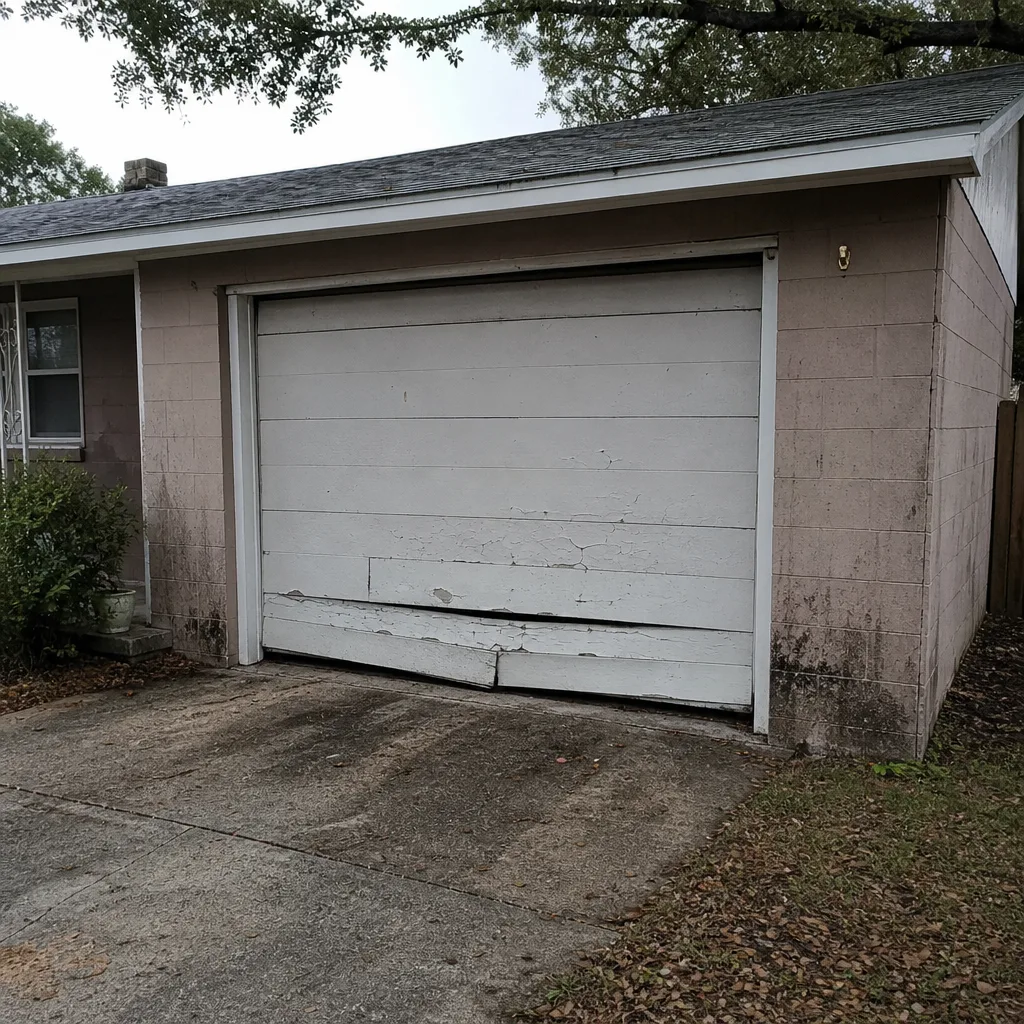 Before
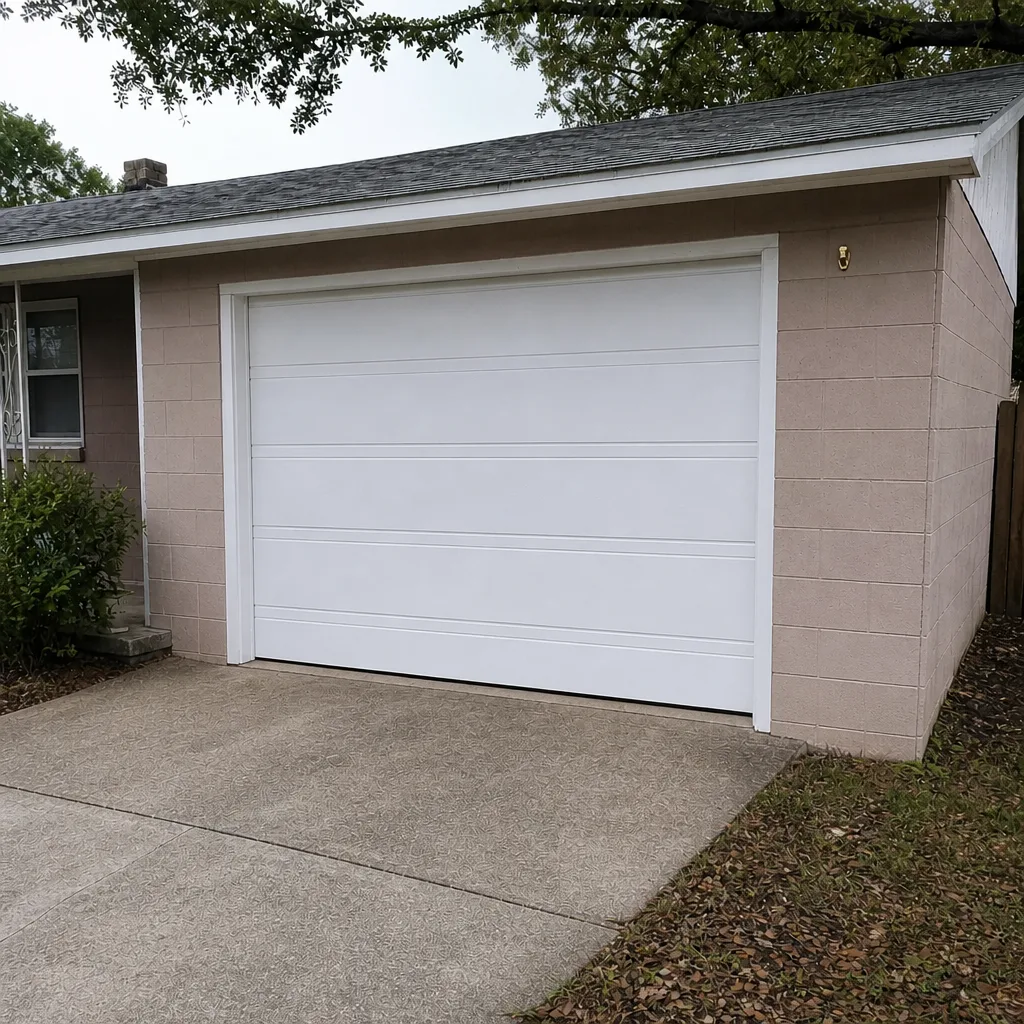 After
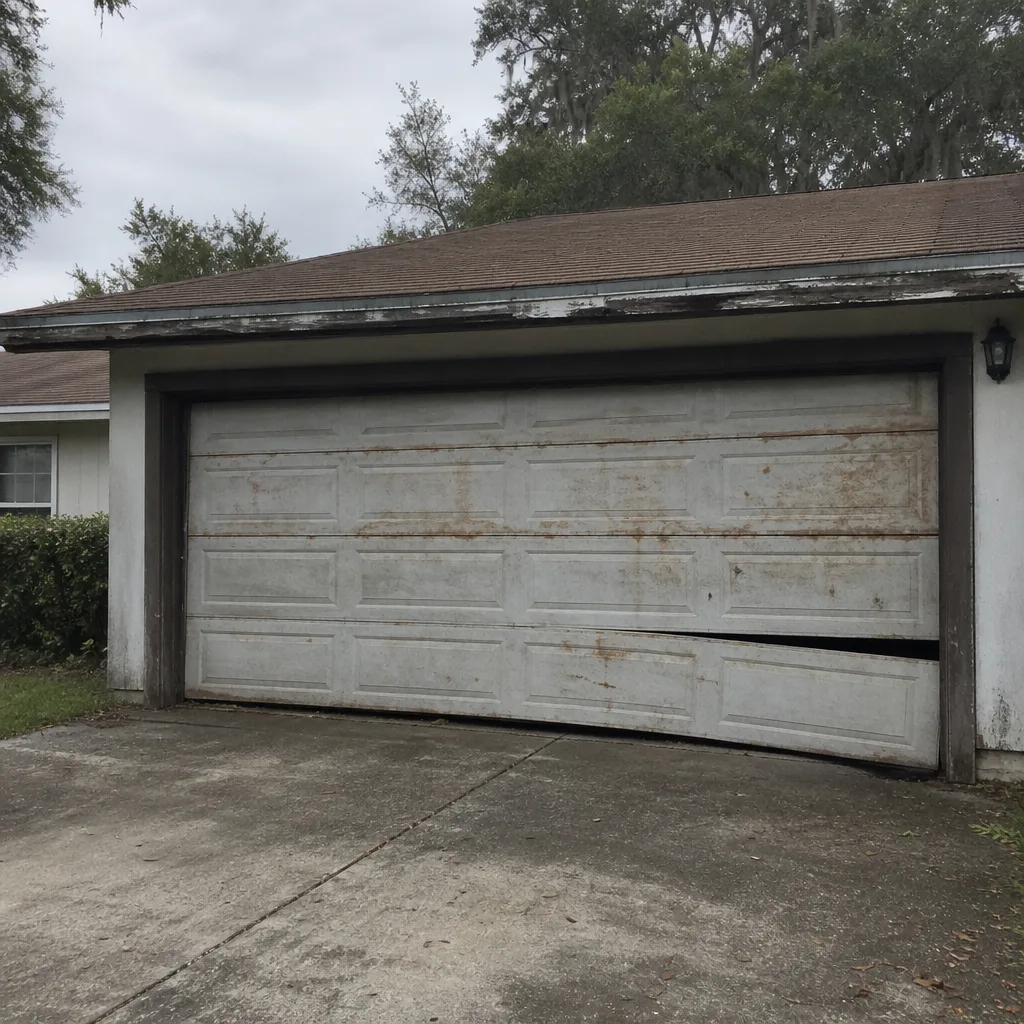 Before
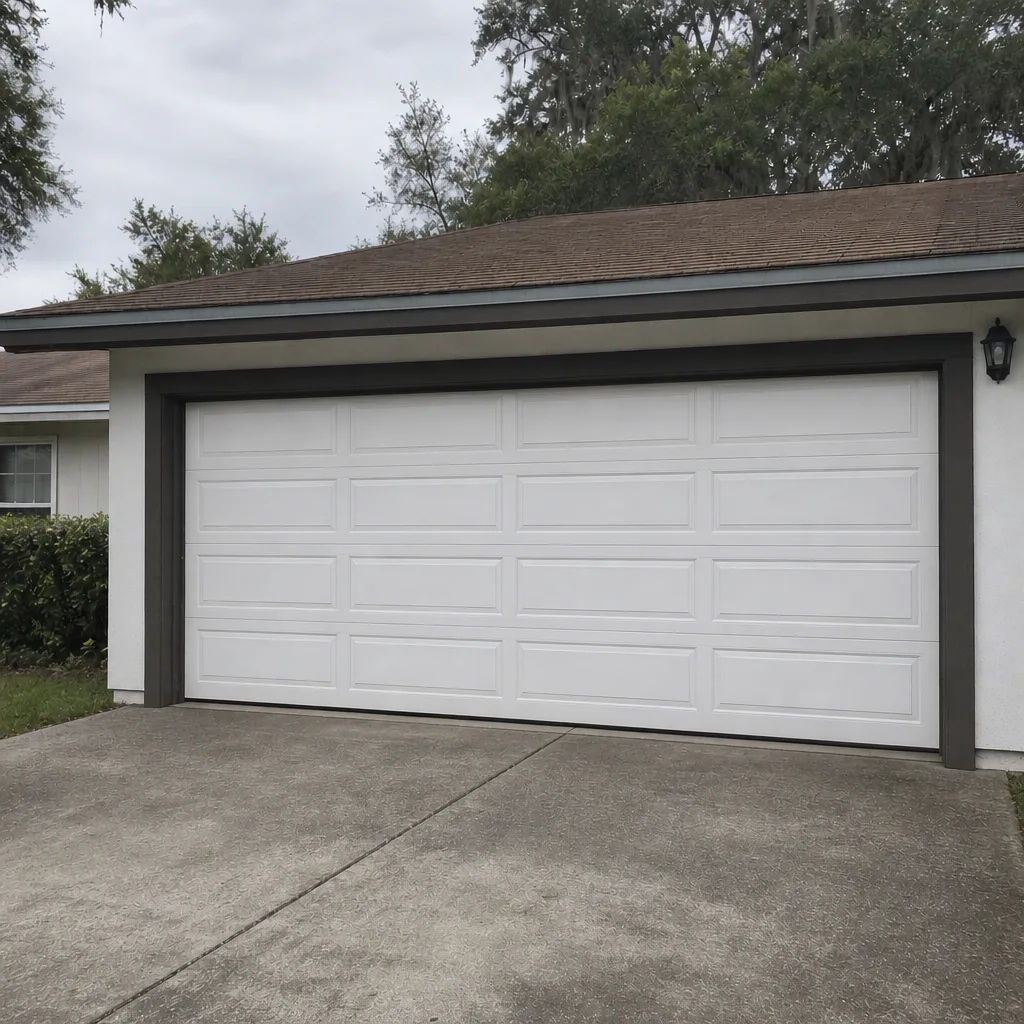 After
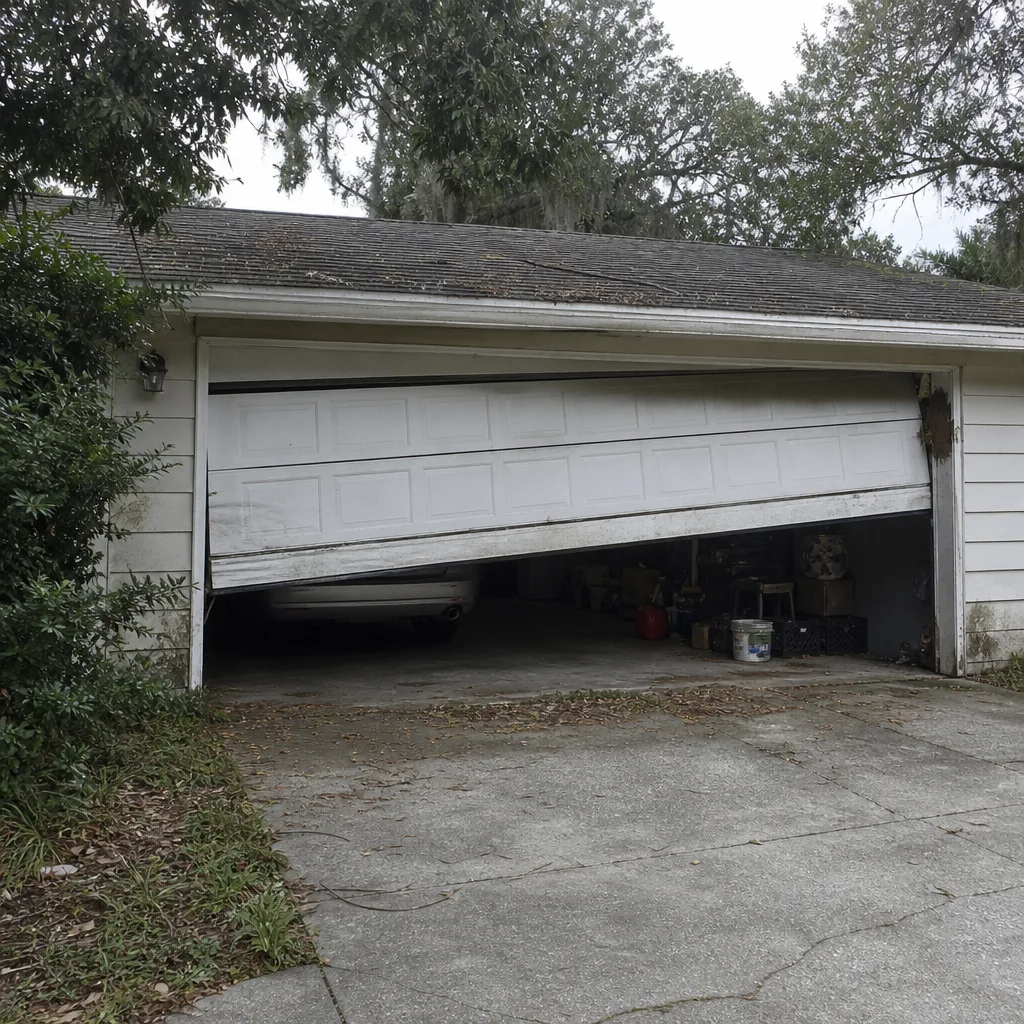 Before
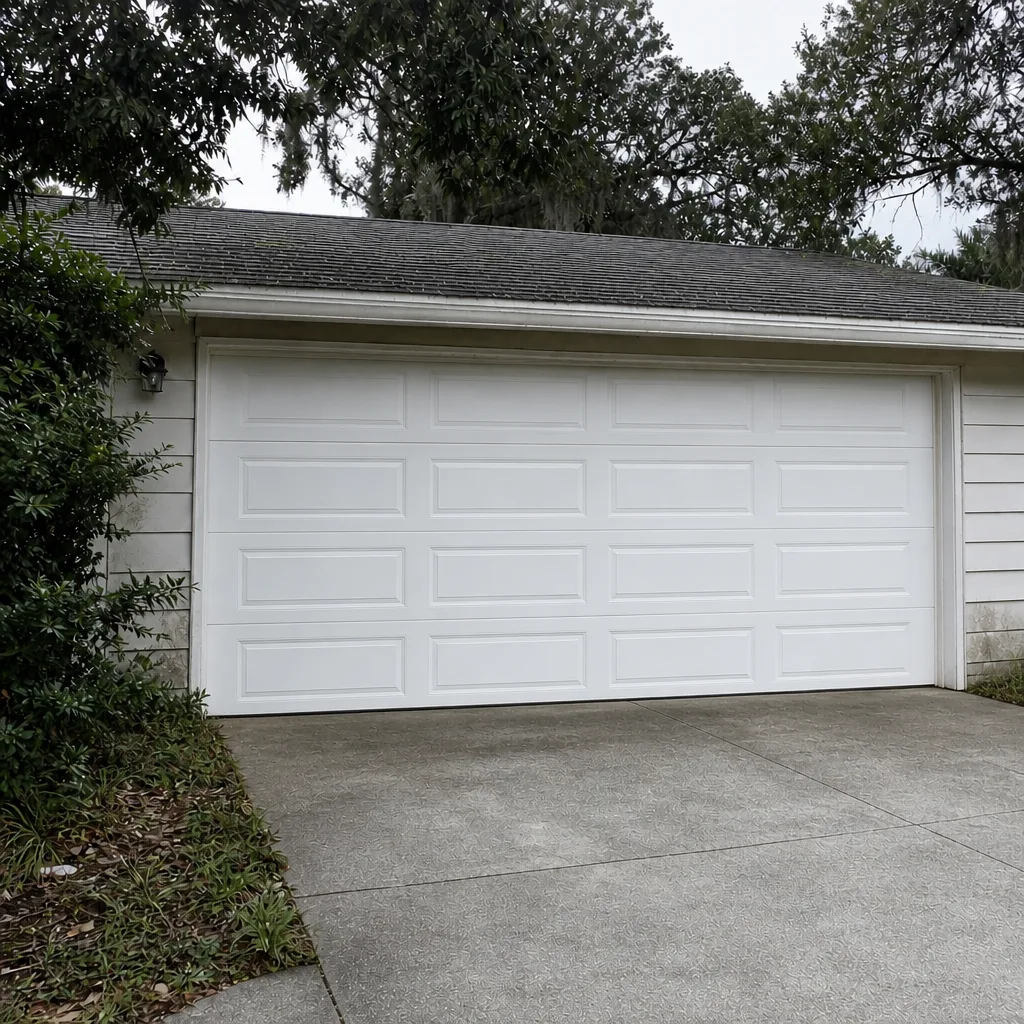 After
When to Call a Professional
Call a professional when any warning sign points at a spring, a cable, or the opener’s wiring. That means a bang and a door that won’t open, a door that hangs crooked, a frayed or kinked cable, a visible gap in a spring coil, or a safety reverse test that fails. Call when the balance test shows the door drops or rises on its own, and call when a slow or loud door doesn’t improve after a clean and lubrication. Those are the cases where waiting turns a repair into a bigger repair.
Gainesville Garage Door Repair Pros offers free estimates in Gainesville, with the price quoted and agreed before any work starts. Call (833) 545-8314. We answer 24/7. Fast dispatch from 7am to 7pm, Sunday through Friday. The local pro we connect you with is licensed and insured as their state requires, so you’re not handing your door to anyone unvetted.
Frequently Asked Questions
The first warning signs are usually unusual noises (grinding, popping, scraping), a door that runs slower than it used to, and a door that fails the balance test and won’t hold halfway open. Visible rust on the spring coils or fraying on the cables are the next signals. Catching any of these early is what turns a spring replacement into a routine call instead of an emergency. Call (833) 545-8314 for a free estimate if you notice any of them.
Yes, the 30-second balance test is safe for a homeowner: close the door, pull the manual release, lift the door to halfway, and let go. A balanced door stays put, while a door that drops or rises fast has a spring problem. The balance test tells you when to call, and never handle the spring or cables yourself, because they’re under extreme tension. Call (833) 545-8314 to book a spring inspection.
In Gainesville’s summer heat, the door usually gains friction rather than the opener failing. The metal track expands slightly, the lubricant thins and collects grit, and the door binds a little more on each cycle, so the opener works harder and the door seems slow. A track clean and proper re-lubrication often restores normal speed. If it doesn’t, call (833) 545-8314 for a free diagnostic estimate.
Spring repair is priced per spring by a written estimate, and we don’t quote a number before we’ve seen the door because spring size and door weight change the job. What we can tell you is that the price is set in the estimate and agreed before any work starts, so there’s no surprise invoice. Call (833) 545-8314 for a free estimate.
No. The written estimate sets the price before any work begins, and the number in the estimate is the number you pay for the agreed work. If the inspection turns up something additional, that gets discussed and priced separately before anyone touches it. Call (833) 545-8314 to schedule a free estimate.
Yes, the local pro we connect you with is licensed and insured as their state requires. We work on the brand you already have, including LiftMaster, Chamberlain, Genie, Clopay, Amarr, Wayne Dalton, Craftsman, and Raynor, so you won’t be told “we don’t work on that model.” Call (833) 545-8314 for a free estimate.
The Bottom Line
Garage doors rarely fail without warning. They send three to five signals over weeks: a change in sound, a door that runs slow in the Gainesville heat, a balance test that fails, rust or a gap on a spring, a frayed cable. Know those signs, check them monthly, and stop using the door the moment a sign points at the spring or a cable. That’s the difference between a routine repair and an emergency call, and between a written estimate and a panic repair. When something looks wrong, don’t guess at it. The cost of waiting is almost always higher than the cost of a look.
Call (833) 545-8314 for a free estimate. We answer 24/7. Fast dispatch from 7am to 7pm, Sunday through Friday. Our technicians have up to 8 years of experience, and we service LiftMaster, Chamberlain, Genie, Clopay, Amarr, Wayne Dalton, Craftsman, and Raynor equipment, from a noisy door to a complete new installation.
Written by the team at Gainesville Garage Door Repair Pros.