
Last updated November 22, 2026
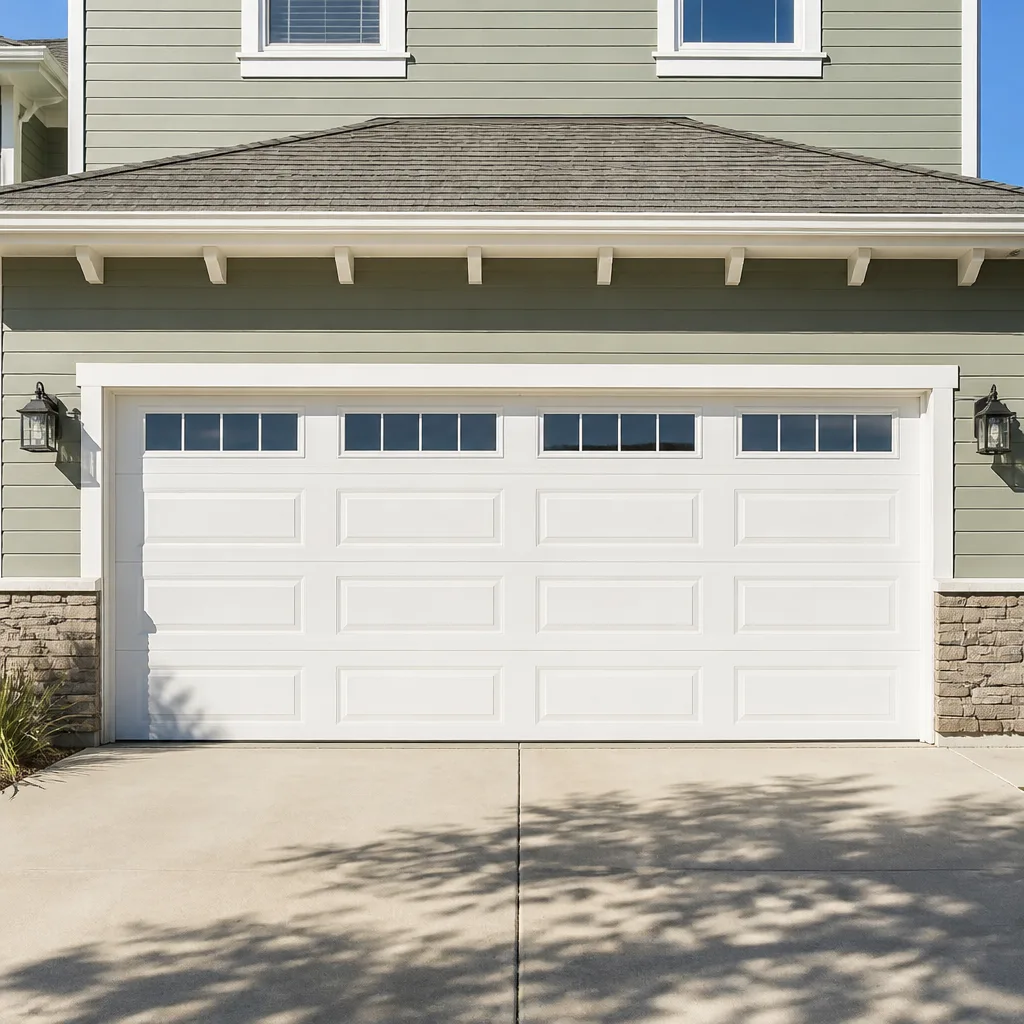 Raised-panel steel
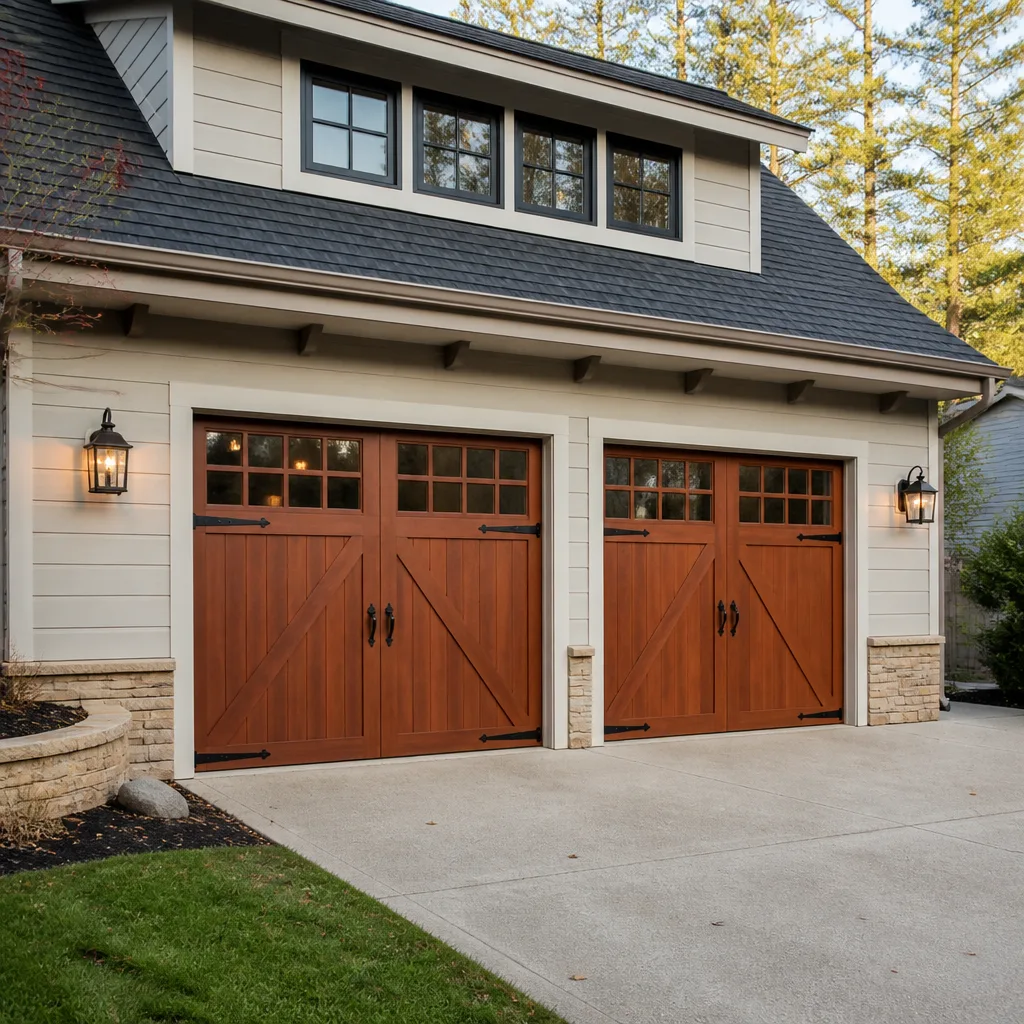 Carriage house
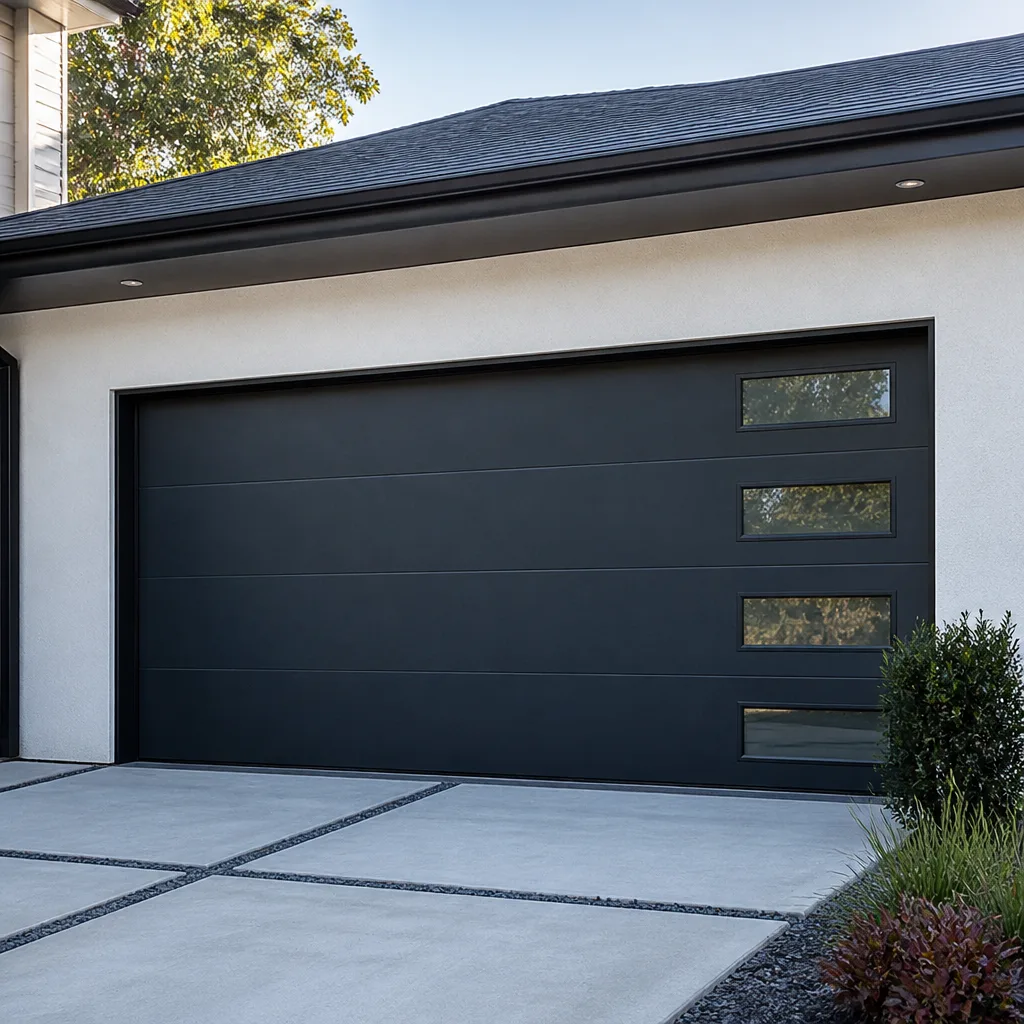 Modern flush
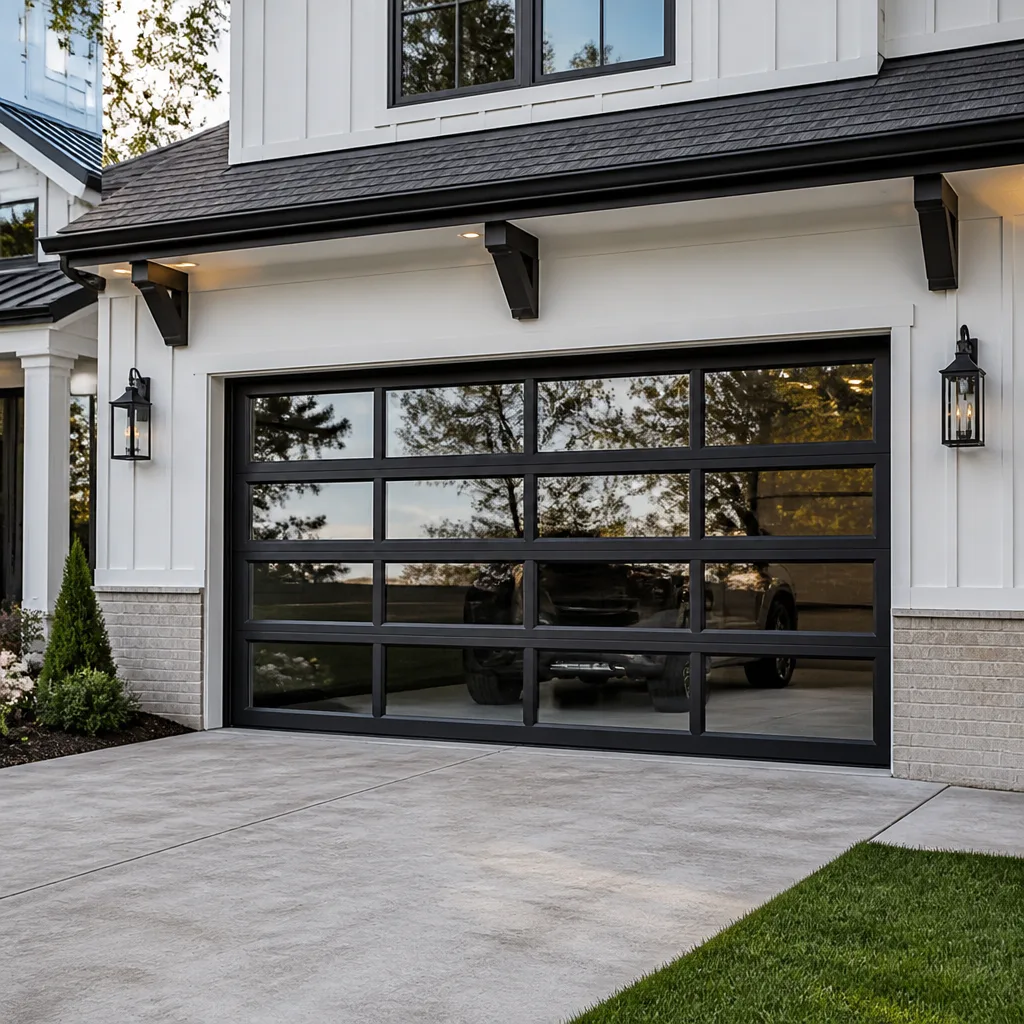 Full-view glass
 LiftMaster openers
 Chamberlain openers
Full 25-point door and opener safety check with every visit - springs, cables, rollers, tracks, and your LiftMaster or Chamberlain opener included
You get a price before we start. It does not change when the pro arrives.
Get your free estimateDIY vs Professional Garage Door: The Gainesville Homeowner’s Decision Guide
Replacing a bottom seal? Go ahead, do it yourself. Attempting to swap a torsion spring because a video made it look manageable? That’s a task where the downside isn’t a bad outcome, it’s a trip to the emergency room. The DIY versus professional question for garage doors isn’t really about how handy you are. It’s about which specific tasks carry asymmetric risk, and in Gainesville those calculations shift because wind-load compliance and humidity-worn hardware raise the stakes. This guide walks through each job task by task, explains the physics behind the dangerous ones, and shows you what “saving money” actually costs when a DIY install goes sideways.
Quick Answer
For most Gainesville homeowners, the safe DIY zone is limited to maintenance: lubricating moving parts, tightening bolts, replacing weather seals, and cleaning and aligning photo-eye sensors. Everything that stores energy or carries structural load, meaning torsion springs, extension springs, cables, and full door replacement, belongs with a trained professional. A professional quote on those tasks is almost always cheaper than the combined cost of parts, specialized tools, injury risk, and rework that DIY tends to produce.
Styles & brands we work with
- Raised-panel steel
- Carriage house
- Modern flush
- Full-view glass
- LiftMaster openers
- Chamberlain openers
Table of Contents
- What Can You Safely Do Yourself on a Garage Door in Gainesville?
- Which Garage Door Repairs Should Always Go to a Professional?
- Why Is Torsion Spring Work Categorically Different From Other Home Repair?
- How Does Florida Wind-Load Certification Affect a DIY Door Replacement?
- What’s the Real Cost Comparison for the Five Most Common Repairs in Gainesville?
- What Happens When a DIY Opener Install Goes Wrong?
- How Does Gainesville’s Humidity Affect Garage Door Hardware?
- How Do You Vet a Garage Door Pro in Gainesville?
What Can You Safely Do Yourself on a Garage Door in Gainesville?
A competent homeowner can handle routine maintenance on a garage door without risk, and doing so actually extends the life of the door. The rule is simple: if the task doesn’t involve a tensioned spring, a cable under load, or lifting the door off its tracks, it’s usually fair game for a Saturday morning with basic tools. If it does, stop and call a pro. Here’s the line drawn plainly.
Safe DIY tasks:
- Lubricating hinges, rollers, and the torsion bar bearing plate with a proper garage-door lubricant (not WD-40, which attracts grit)
- Replacing the bottom weather seal or the perimeter side seals
- Tightening bolts on the hinges and the track brackets (checking that they’re snug, not overtightened)
- Cleaning the photo-eye lenses and confirming the sensors are aligned
- Wiping down and lightly waxing a steel or aluminum door to slow humidity-driven wear
- Testing the auto-reverse safety feature by placing a roll of paper towels in the door’s path
- Replacing the battery in a wall-mounted opener or a remote fob
Not safe DIY:
- Replacing or adjusting torsion springs
- Replacing or adjusting extension springs
- Working on the lift cables, drums, or bottom brackets
- Removing and rehanging the door panels for a full replacement
- Adjusting the opener’s travel limits if you’ve never done it (the wrong setting can damage panels or crush objects)
- Any repair on a door with a visibly bent track or a damaged bottom section
In Gainesville, the split leans a little harder toward “call a pro” than it would up north. Our heat and humidity are rough on rollers, hinges, and bottom brackets, so a door that looks fine in spring can be quietly corroding by late summer. If you’re not sure which category a task belongs in, that uncertainty itself is the answer.
Which Garage Door Repairs Should Always Go to a Professional?
Four categories of repair should always go to a trained technician: spring work, cable work, track realignment on a hung door, and any installation or replacement. Each involves either stored energy, structural load, or both. The reason isn’t that these tasks are “hard” in a general sense. It’s that the failure mode when they go wrong is severe, sometimes catastrophic, and often involves personal injury before any property damage shows up.
- Torsion and extension springs. A wound torsion spring holds hundreds of pounds of force. If it releases while you’re in the wrong position, the result is not a broken door. It’s a broken bone or worse. This is the single most dangerous task in the trade, and it’s also the most common repair.
- Cables and drums. The lift cables are under tension that depends on the spring. Loosening a cable without first releasing the spring can whip the cable loose with serious force. Cable work is a technician job.
- Track realignment on a hung door. A bent track can usually be straightened on the bench, but once the door is hung and under load, adjusting the track means controlling the door’s weight at the same time. Without the right tools, the door can come off the track and fall.
- Full door replacement. A garage door section weighs 60 to 120 pounds depending on material and size, and the top section has to be balanced on a track before it’s secured. This is also where Florida wind-load rules enter the picture, which we’ll cover next.
Beyond the danger, there’s a practical second reason. Many of these jobs need specialized tools a homeowner isn’t going to buy for one repair: a proper winding bar set, a spring-scale, a counterbalance kit, and the correct torsion springs sized to the door’s exact weight. Investing in those tools costs more than the repair itself.
If your door is making noise, catching on the track, or refusing to open all the way, the smart move is a professional diagnosis before you touch anything. Garage door repair starts with confirming what’s actually wrong, and in Gainesville that first visit is free.
Why Is Torsion Spring Work Categorically Different From Other Home Repair?
Torsion springs are different from every other home repair task because they don’t just break when they fail. They release, storing energy delivered in a fraction of a second. A torsion spring is a tightly coiled steel rod that’s been wound by a technician to counterbalance the door’s weight. At rest, it’s holding roughly the door’s full weight. When the spring snaps, that stored force releases all at once, and the spring itself, the winding bar, and anything else in the way can go flying. Understanding the mechanics is the reason a professional isn’t a luxury on this task, and why “I’ll just watch a video” is the wrong starting point for a Gainesville homeowner.
Here’s what’s actually happening in plain terms:
- A standard two-car garage door weighs somewhere between 130 and 200 pounds. That weight gets divided between the torsion spring and the door’s hinges as it opens and closes.
- To balance the door, a technician winds the spring a specific number of turns, usually 7 to 10 depending on door height. Each turn adds stored energy.
- The spring holds that energy at all times, not just when the door is moving. Even a closed door is under spring tension.
- When the spring snaps, the energy is released instantly and without direction, which is why damage to the door panels, the tracks, and nearby vehicles is common, and why physical injury is a real possibility.
- Fingers are the most frequent casualty when a homeowner tries to adjust or replace a spring without winding bars. A proper spring swap requires the correct winding bars, and using anything else (screwdrivers, punches, ratchet extensions) is how people get hurt.
Our technicians treat spring work as a dedicated specialty rather than a side task, precisely because it’s the leading cause of garage door breakdowns and the task with the least forgiving margin for error. If you’re hearing a loud bang from the garage and the door won’t lift, that’s a spring failure, not a DIY opportunity. Garage door spring repair is a service best left to a trained pair of hands.
How Does Florida Wind-Load Certification Affect a DIY Door Replacement?
In Florida, replacing a garage door without the right wind-load rating and certification can void the windstorm coverage on that door and sometimes create gaps in your homeowner’s insurance. That’s the single biggest reason DIY door replacement is a bad idea in Gainesville. It’s also the piece most homeowners don’t hear about until they’ve already installed the door. A garage door is the largest opening in your home’s exterior envelope, and Florida building code treats it that way.
What this means practically:
- Florida’s building code requires garage doors to meet specific wind-load ratings based on your property’s location. Alachua County is inland, but wind-loading rules still apply to any permitted door replacement.
- Most cities and counties in Florida issue permits for garage door replacement, and the permit process is where wind-load certification gets reviewed. If you don’t pull a permit, the work isn’t inspected, and your insurer can treat the door as unapproved.
- When you buy a new door, the manufacturer issues documentation showing the wind-load rating. That documentation is what your insurer will ask for if you ever file a storm-damage claim on the door.
- A DIY install that skips the permit and the certification leaves you with a door that protects the house on a normal day and fails you when you need insurance most.
The fix is straightforward. A licensed installer pulls the permit, installs a door with a documented rating, and hands you the paperwork. If you’re not sure whether the door on your home already meets the current standard, ask your city’s building department and your insurance agent. That conversation is free and worth having before any replacement decision.
Full garage door repair and installation work in Gainesville runs through the same permit process, which is one practical reason a professional quote on a replacement is more competitive than it first looks.
What’s the Real Cost Comparison for the Five Most Common Repairs in Gainesville?
The real cost of DIY isn’t just the part price. It’s the part, the tools, the safety risk, the chance of rework, and the time. For five of the most common Gainesville garage door repairs, here’s how the two columns actually compare. The professional figures below are typical Gainesville-market estimate ranges for the work described, and the written estimate from the company sets the final price.
- Torsion spring replacement (one spring): DIY parts cost is roughly $40 to $90 for the spring, but you’d also need winding bars and an accurate spring-weight calculation, and the injury risk is real. A professional single-spring replacement typically runs $180 to $340, with a matched pair around twice that. For one spring, the DIY “savings” is small and the downside is large.
- Opener replacement: A replacement opener runs $150 to $400 depending on brand and smart features, and a professional install typically adds $150 to $300 in labor. DIY saves the labor, but the most common DIY opener install mistakes (travel limits set wrong, misaligned rail, damaged header bracket) cost more to fix than the labor would have been.
- Off-track door realignment: DIY cost is near zero in parts, but the door is under load and can fall. A professional realign typically runs $120 to $250 in Gainesville, and it’s a task where the professional option is the only safe choice.
- Bottom seal replacement: Parts run $25 to $60, professional install adds $70 to $140. This is the one task where DIY genuinely makes sense if you’re comfortable on a step ladder.
- Panel replacement (single section): A DIY replacement section runs $150 to $500 depending on brand and door style (Amarr and Wayne Dalton sections are model-specific and often need to be ordered). Professional install is typically $200 to $450 in labor and includes the panel on the correct track, balanced afterward. DIY panel work on a hung door is a real injury risk, so professional is the better call.
Notice the pattern: the tasks with the smallest dollar delta between DIY and professional are exactly the safest ones, and the tasks with the biggest dollar delta are the dangerous ones. That’s the asymmetry in plain sight. Call (833) 545-8314 for a free estimate before you buy a part or a tool.
What Happens When a DIY Opener Install Goes Wrong?
A DIY opener install fails quietly, then loudly. The quiet failure is a rail that’s slightly out of level or travel limits set a half inch too far. The loud failure comes six months later when those half-inch errors have bent door panels, stripped the opener’s gear, or stripped the trolley carriage. By then the repair bill usually exceeds what the professional install would have cost on day one. The reason is simple physics: a garage door opener doesn’t lift the door, it steers a balanced door up and down. If the balance, rail, or limits are off even slightly, the opener fights the door on every cycle.
Here’s the sequence we see most often:
- Week 1: The door opens and closes. Slightly noisier than before, but nothing alarming.
- Month 2: One panel starts to show a slight gap at the top. The owner assumes the door has shifted.
- Month 4: The opener starts to strain audibly near the fully closed position. Rollers wear unevenly.
- Month 6: A panel is visibly bowed or the trolley carriage has failed. Sometimes the opener motor quits, sometimes a hinge shears.
The reason is almost always one of three things: the rail wasn’t level, the travel limits weren’t set right, or the door’s balance was off before the opener went on and nobody checked it. A properly installed opener on a balanced door is nearly silent. A DIY install on an unbalanced door will reveal itself within a few months. If you’ve already installed an opener yourself and something feels off, our garage door opener repair team can re-check the balance and reset the limits before the door sustains real damage. Smart-home models like LiftMaster’s myQ and Genie’s Aladdin are just as serviceable as traditional units once the mechanics are correct.
How Does Gainesville’s Humidity Affect Garage Door Hardware?
Gainesville’s summer humidity accelerates wear on garage door hardware faster than most homeowners expect. Rollers and hinges are usually the first to show it, then the bottom brackets and track surfaces. This isn’t reason to panic, but it does change the maintenance calendar. A door that would need lubrication once a year in a drier climate benefits from quarterly attention here. A steel door with a chipped paint spot can start showing rust in a matter of weeks if the paint isn’t touched up. Understanding the humidity angle keeps small issues from becoming professional repairs.
What to watch in a Gainesville garage:
- Rollers that squeal or grind (a sign the bearing grease has washed out or dried)
- Hinges with visible rust bloom or white corrosion powder
- The bottom bracket and the lowest hinge on each side, which sit closest to the slab and get the most moisture
- Any steel door with chipped or scratched paint, especially near the bottom edge
- A wooden door’s paint joints and end grain, which absorb humidity and swell
Two habits cover most of this. Lubricate hinges and rollers on a reasonably regular schedule with a proper garage-door lubricant, and touch up paint chips on steel doors before they bloom. If you’re not confident which parts are safe to touch, ask a pro on the next visit. Humidity is the reason a Gainesville door often needs service earlier than the manufacturer’s generic schedule suggests, and the reason we’re familiar with the older Craftsman, Raynor, and Amarr doors that make up most of the housing stock here.
How Do You Vet a Garage Door Pro in Gainesville?
Vetting a garage door pro comes down to five checks: licensing and insurance, written estimates, brand familiarity, spring experience, and a clear answer on permits. If a company can’t answer those five clearly, look elsewhere. Garage doors are a trade with no universal license category in Florida, so the specific licensing credential varies; ask for the company’s credentials in writing and check that the person doing the work is covered by the company’s insurance. The local pro we connect you with is licensed and insured as their state requires.
- Licensing and insurance: Ask for proof of both. State-licensed and insured matters because a garage door spring or a door replacement is exactly the kind of job where an uninsured operator can leave you holding the loss.
- Written estimate: The estimate should be in writing, with the work scoped and the price agreed before anything starts. If the estimate is verbal or missing a scope, that’s a warning sign.
- Brand familiarity: Ask whether they service the brands on your door and opener. If your door is a Raynor or an Amarr and the company only “does LiftMaster,” you’re going to get a handoff. We’re factory-familiar with LiftMaster, Chamberlain, Genie, Clopay, Amarr, Wayne Dalton, Craftsman, and Raynor, which covers nearly everything already installed in Gainesville homes.
- Spring experience: Ask specifically how the company handles spring repair. A company that treats spring work as a specialty is different from one that treats it as a task on a list.
- Permit handling: For replacement work, ask whether the company pulls the permit. If the answer is “you don’t need one,” ask them to explain in writing.
Our technicians have up to 8 years of experience across those brands, and the value of brand familiarity is that your door gets diagnosed correctly on the first visit instead of getting a “we don’t work on that model” response. Gainesville Garage Door Repair Pros works on the brand you already have, whether it’s a twenty-year-old Craftsman opener or a Genie Aladdin your electrician installed last year.
Common Mistakes to Avoid
- Treating a torsion spring like a “hard” DIY task. It isn’t hard, it’s dangerous. The severity of a spring failure is the reason this one shouldn’t be on your list, regardless of your skill with a wrench.
- Skipping the permit on a door replacement. In Florida, a door installed without wind-load documentation can void your storm-damage coverage on that door. Ask the city’s building department before you buy the door.
- Assuming a loud door just needs lubrication. Noise in a Gainesville garage is often a worn roller or a failing bottom bracket, and lubricating over the top of a failing part only postpones the failure and often makes it worse.
- Replacing an opener before checking the door’s balance. An unbalanced door will destroy a brand-new opener. If the door doesn’t stay put halfway up, the opener is not the problem.
- Buying a replacement panel without matching the model. Amarr and Wayne Dalton panels are model- and style-specific, and a “close enough” panel can look visibly off and fit badly.
- Using WD-40 as garage door lubricant. It cleans well, but it attracts grit to the rollers and hinges. Use a garage-door-specific lubricant instead.
- Ignoring the far corner of the door. The far-side hinge and corner brackets are where corrosion and misalignment start, and where most homeowners never look.
See the difference
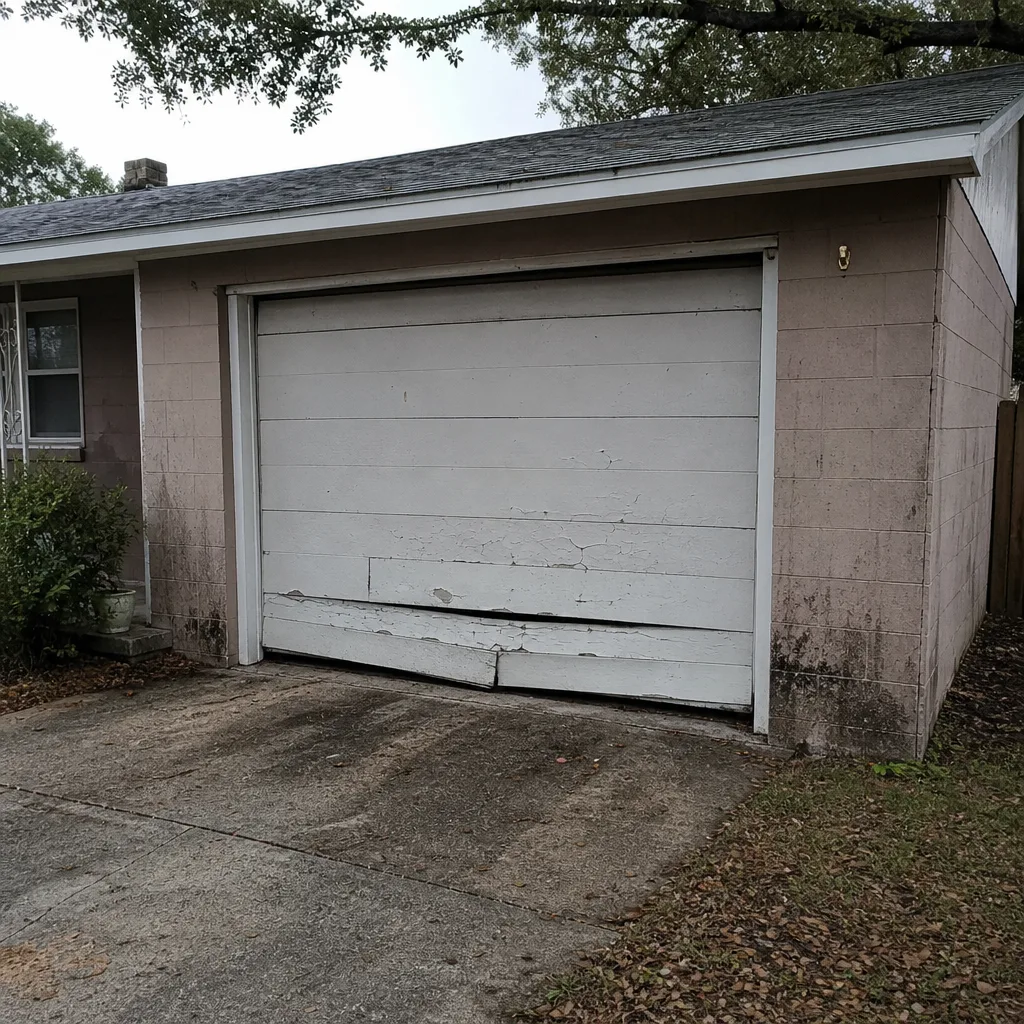 Before
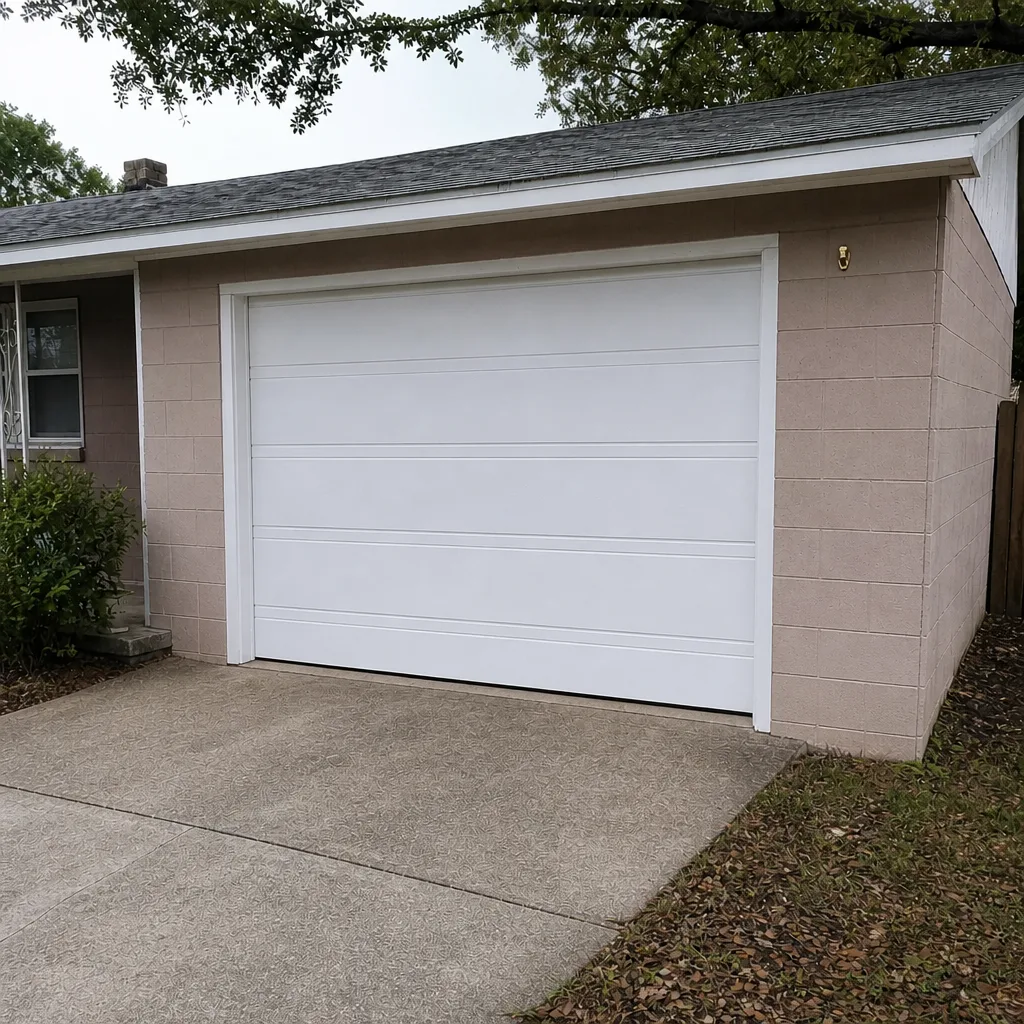 After
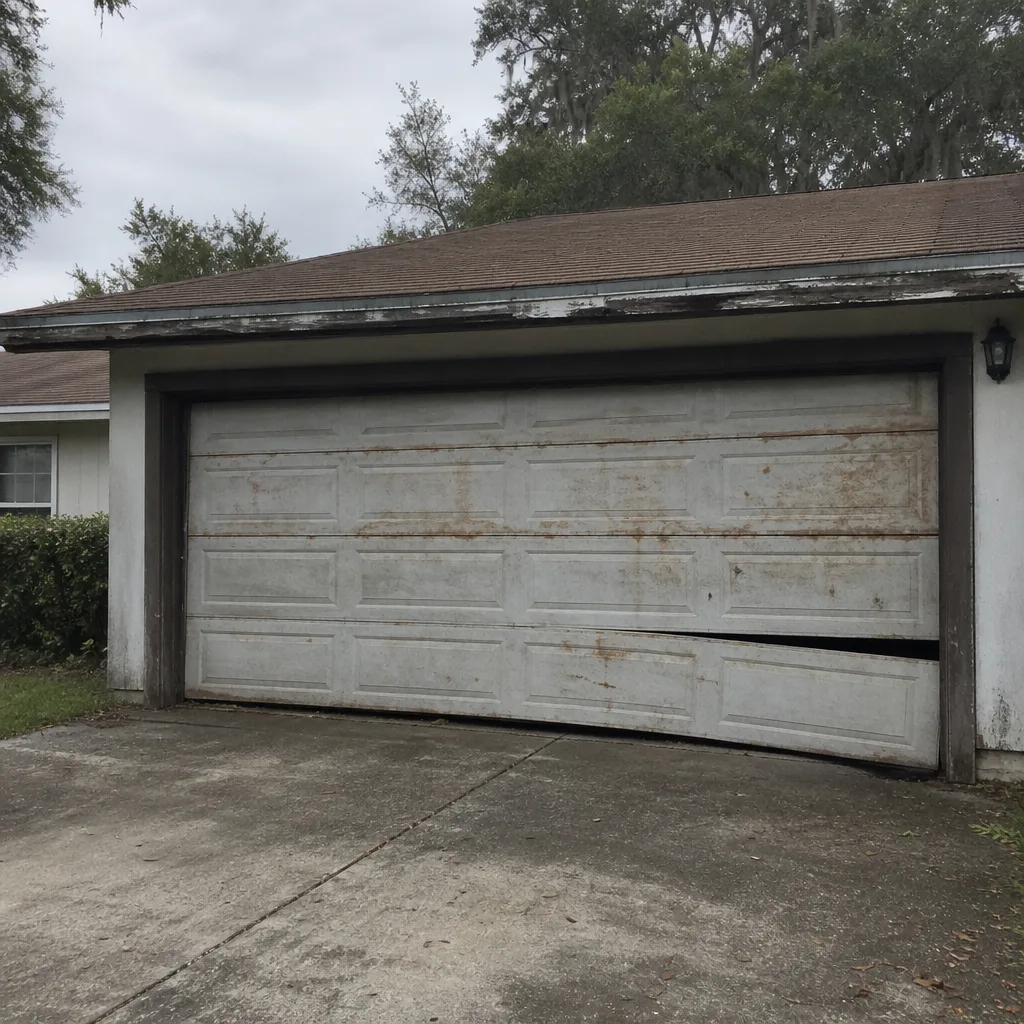 Before
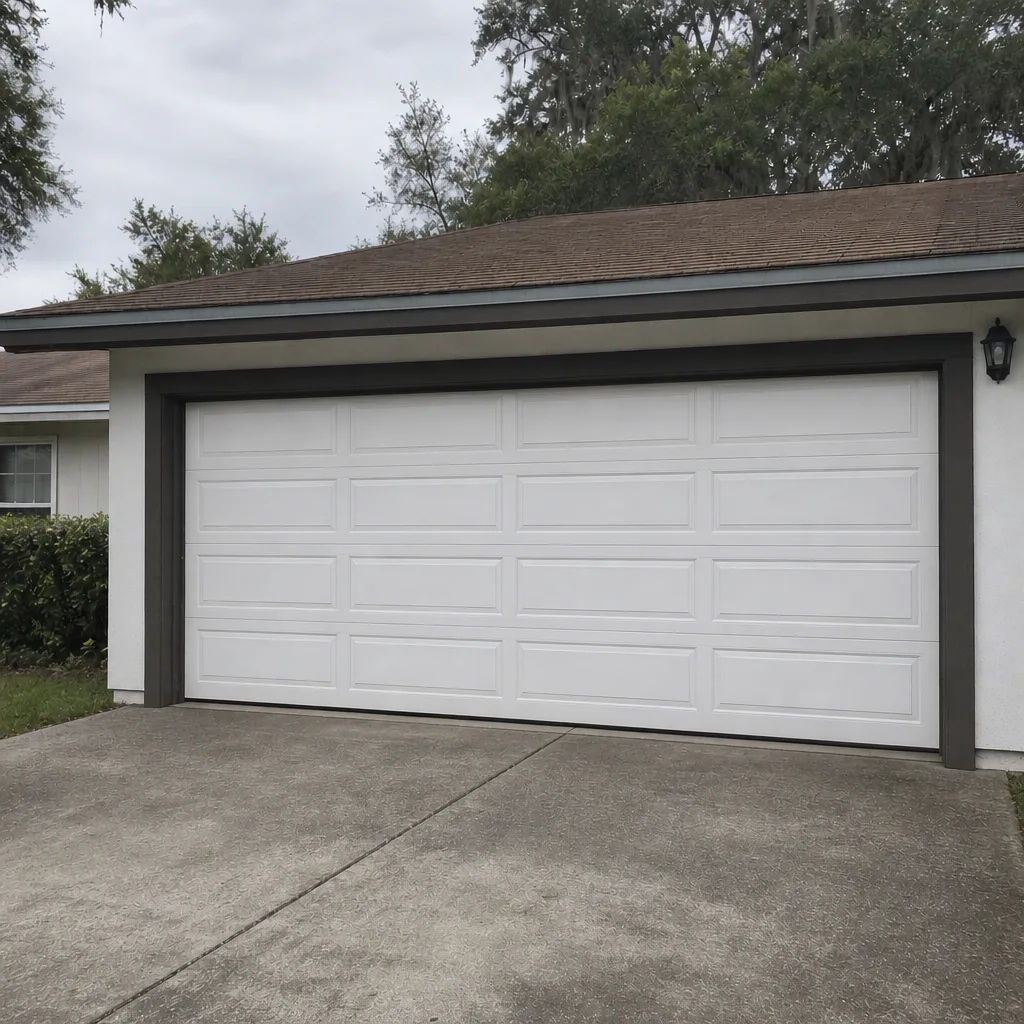 After
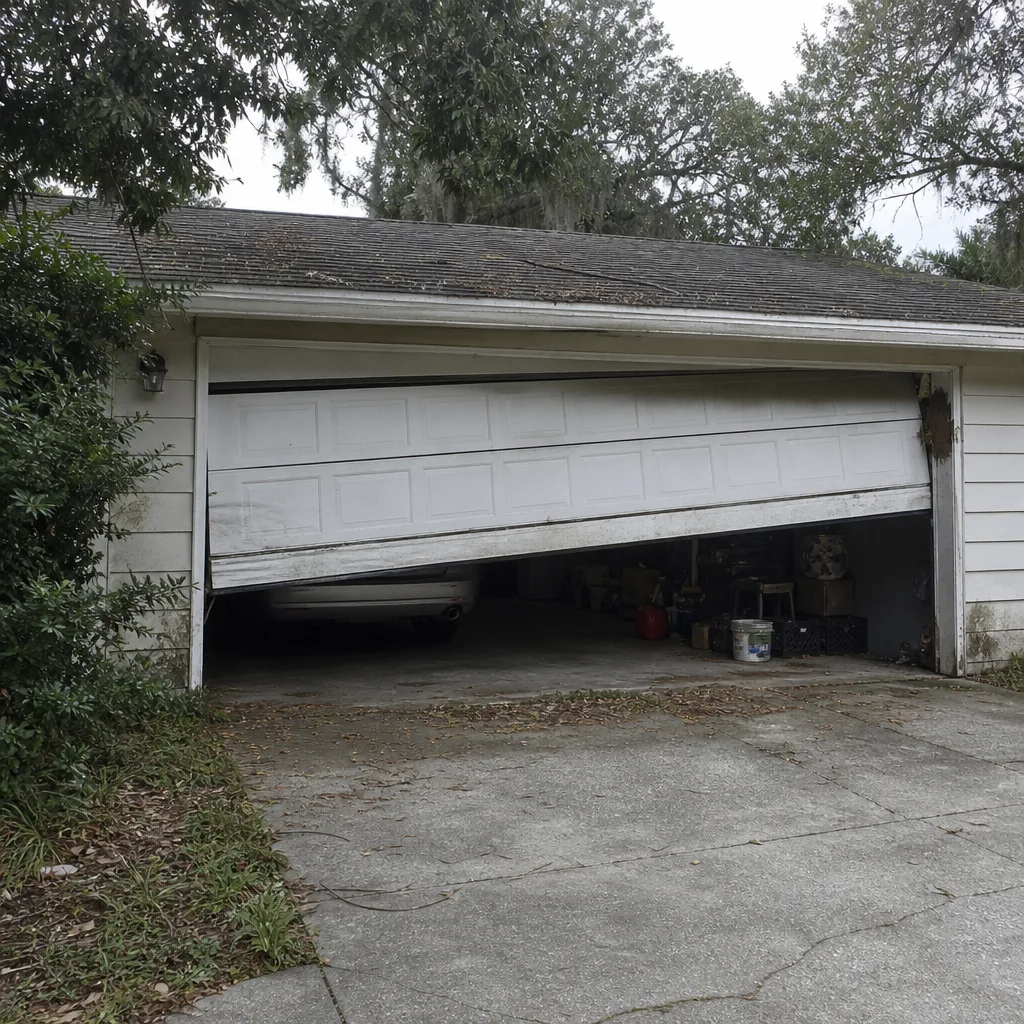 Before
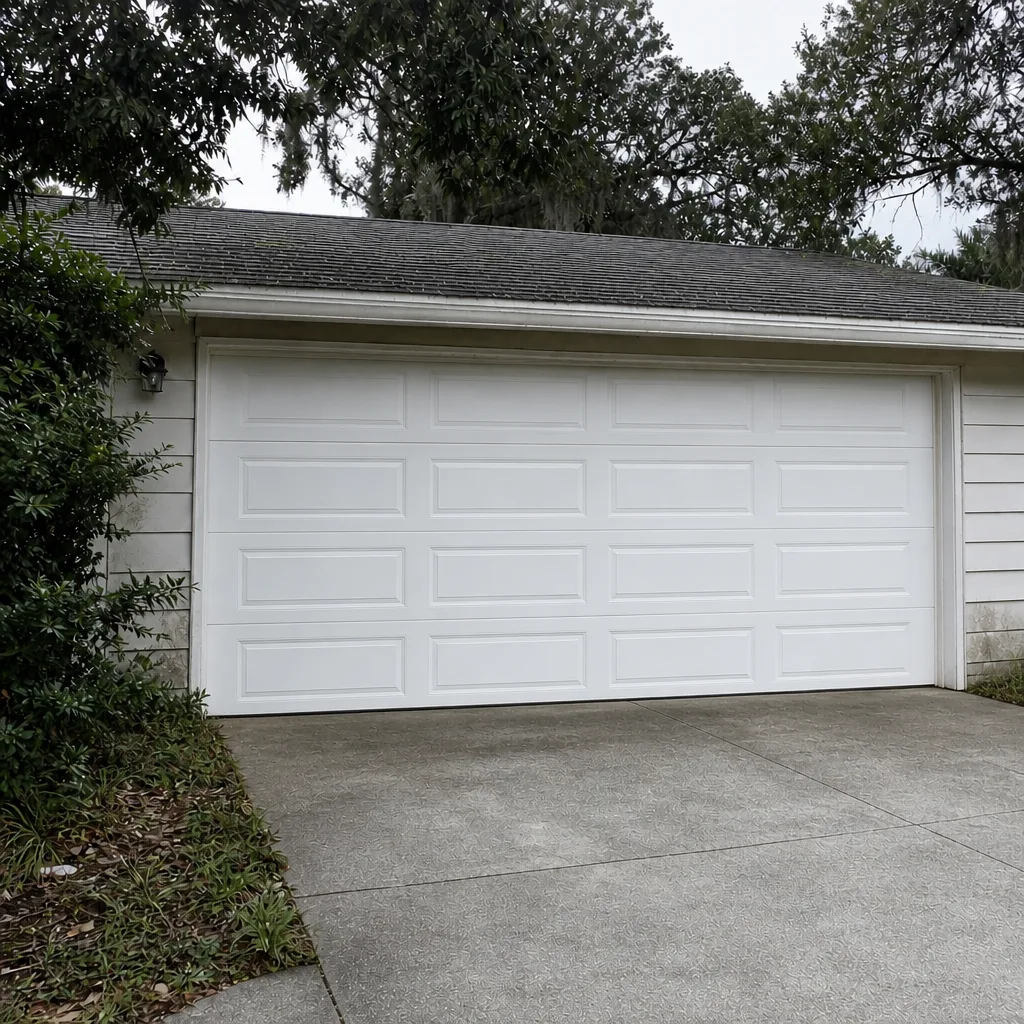 After
When to Call a Professional
Call a professional the moment any of these come up: the door won’t open or close at all, a spring has visibly snapped, the door is crooked on its tracks, you hear a loud bang from the garage, the door is sagging, or the opener runs but the door doesn’t move. Call a professional if you’re planning to replace the door, install a new opener for the first time, or replace a panel on a hung door. Also call if you started a DIY task and found yourself unsure halfway through, because stopping at 60 percent with a door under load is worse than starting over. Gainesville Garage Door Repair Pros offers free estimates in Gainesville, and same-day service is available for repair calls. Call (833) 545-8314. We answer 24/7. Fast dispatch from 7am to 7pm, Sunday through Friday. The estimate is free, and the price is set per job by the written estimate before any work starts.
Frequently Asked Questions
No. Torsion spring replacement is not a safe DIY task because the spring stores enough force to cause serious injury the instant it releases, and the force releasing is exactly what happens every time a spring is swapped. The correct tools (winding bars sized to the spring) and the correct spring sizing (matched to the door’s exact weight) are both required, and neither is something a homeowner is likely to already own. Call (833) 545-8314 for a free spring-repair estimate. Winding spring work onto a job in Gainesville is routine for a trained technician and dangerous for everyone else.
Typical Gainesville single-spring replacement runs $180 to $340 in estimate range, and replacing a matched pair together, which is standard, runs about twice that. The final price is set per job by the written estimate before work starts, so a call gets you a real number rather than a guess. Our technicians have up to 8 years of experience with spring work, which is the repair most likely to be done wrong in a DIY attempt. Call (833) 545-8314 for a free estimate.
It can, yes. In Florida, garage doors have to meet specific wind-load ratings based on the property’s location, and that documentation is usually reviewed during the permit process for a replacement. A door installed without a permit and without the manufacturer’s wind-load documentation can be treated by an insurer as unapproved, which means storm-damage claims on that specific opening may not be covered. Ask the City of Gainesville’s building department and your insurance agent to confirm what your property requires. When you buy a new door, keep the manufacturer’s rating paperwork in a safe place.
It’s possible, but it’s the classic DIY trap because opener installs fail slowly. The opener’s job is to steer a balanced door up and down, not to lift it, so a rail that’s slightly out of level or travel limits set a bit too far will damage panels and strain the motor over months. By the time the damage is visible, the repair costs more than the professional install would have. If you want it done correctly with the balance checked on the same visit, our garage door opener repair team can install or recheck yours. Call (833) 545-8314 for a free estimate.
You can safely lubricate hinges and rollers, tighten bracket bolts, replace the bottom weather seal, clean the photo-eye sensors, test the auto-reverse safety feature, and touch up paint on a steel door. These tasks don’t involve stored spring energy or structural load, so they’re fair game on a weekend. Anything involving springs, cables, drums, or removing the door should go to a professional. If you’re not sure which side of that line a task falls on, call (833) 545-8314 and we’ll tell you.
In almost all cases, yes. We’re factory-familiar with LiftMaster, Chamberlain, Genie, Clopay, Amarr, Wayne Dalton, Craftsman, and Raynor, which covers the vast majority of doors and openers already installed in American homes. That includes smart-home-connected systems like LiftMaster myQ and Genie Aladdin, and it includes older mechanical Craftsman and Raynor units. Your brand should never be the reason you get handed off. Call (833) 545-8314 for a free estimate.
The Bottom Line
The DIY-versus-professional question for garage doors comes down to risk, not skill. Seal replacement, lubrication, and photo-eye cleaning are yours to handle. Springs, cables, track realignment on a hung door, panel replacement, and full door installation are professional work because the failure mode is severe and the Florida permit and wind-load rules make DIY a bad trade. The real cost comparison usually favors the professional quote once you add up parts, tools, and the risk of rework. When you’re ready for a written estimate, call (833) 545-8314. We answer 24/7. Fast dispatch from 7am to 7pm, Sunday through Friday.
Written by the team at Gainesville Garage Door Repair Pros.